
by Izzy Kowell | Aug 1, 2020 | Feature, General, News
San Quentin, CA. Prison populations across the U.S. have been hit hard by COVID-19. At San Quentin State Prison, the Prison University Project is trying to provide material and emotional support. The Prison University Project is a nonprofit working to expand access to higher education inside the California prison system. Due to COVID-19, all programming that is considered non-essential has been suspended, this includes the college classes offered by Prison University Project. However, the organization is taking on other projects to support the San Quentin prison community.
In recent weeks, the Prison University Project has coordinated the installation of mobile showers for corrections staff to help mitigate the possible spread of COVID-19.
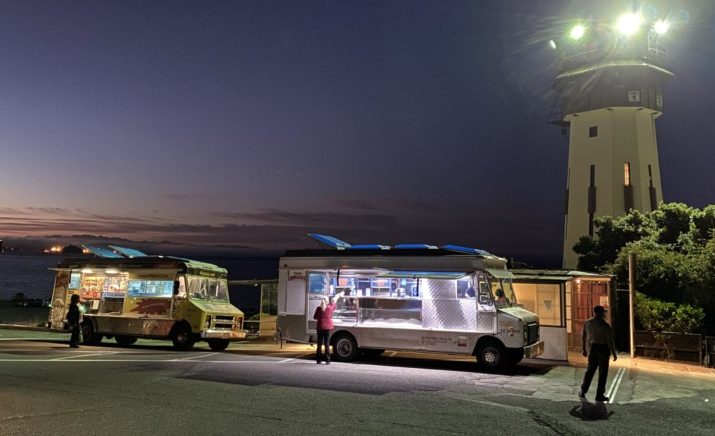
The Prison University Project also provides food trucks that allow staff to grab something to eat before or after their shifts.
Efforts to assist staff during the pandemic is just one of the initiatives the Prison University Project has taken on. The organization’s outreach notes, “Most notably, we coordinated the successful deliveries of care packages to the entire populations of San Quentin and Avenal State Prisons. […] San Quentin’s leadership has also allowed us to send magazines, textbooks, art supplies, hand-crank radios, and digital content (via closed-circuit television) to people on death row and other areas of the prison outside of the general population areas.”
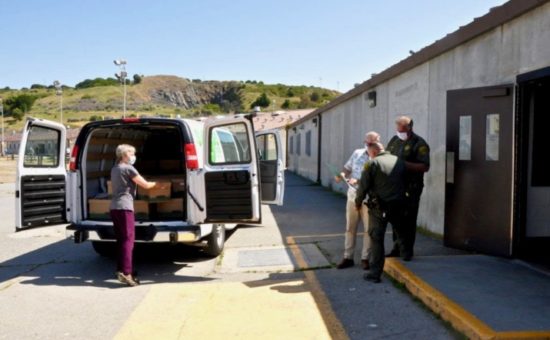
Prison University Project unloads care packages. (Photo credit, Lt. Sam Robinson)

Prison University Project student and Senior Editor of the San Quentin News, Juan Moreno Haines (pictured above) has emerged as a voice of the incarcerated during the COVID-19 crisis.
Juan Moreno Haines’ published pieces with information about what’s happening inside San Quentin during the COVID-19 pandemic can be seen at this link: https://theappeal.org/authors/juan-moreno-haines/
From the Prison University Project:
Here’s how to help incarcerated individuals at the moment. Increasing visibility of both formerly and currently incarcerated individuals by sharing and supporting their “advocacy efforts and publications widely” is one way in which people on the outside can help. Donations to the Prison University Project’s general operations and to its Covid-19 Care Package Initiative, both of which are linked here, are also useful. Additionally, donations to organizations such as Bonafide are appreciated. Bonafide helps individuals inside prepare for release and supports them when they leave the prison by providing essential supplies including cell phones and clothing.
The mission of the Prison University Project is to provide an intellectually rigorous, inclusive Associate of Arts degree program and College Preparatory Program, free of charge, to people at San Quentin State Prison; to expand access to quality higher education for incarcerated people; and to foster the values of equity, civic engagement, independence of thought, and freedom of expression.
by Satchi Metaxas | Aug 1, 2020 | Feature, General, News
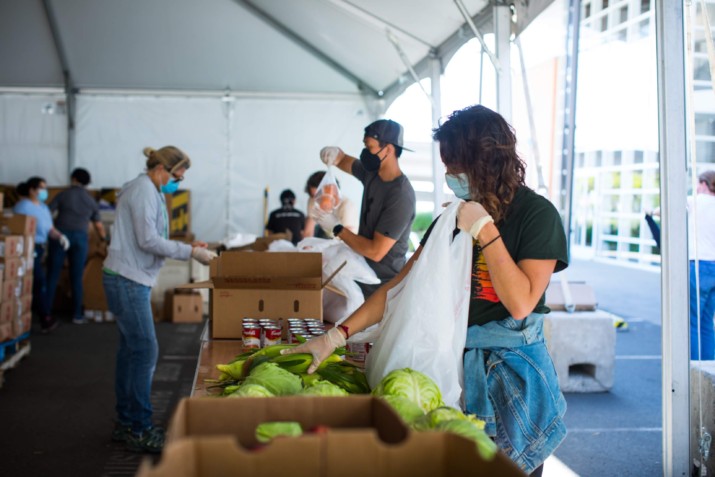
San Francisco, CA. The economic turmoil caused by COVID-19 has heightened another life-threatening issue: food insecurity. Fortunately, food banks such as the San Francisco-Marin Food Bank (pictured above) are rising to the occasion. In recent months, the SF-Marin Food Bank has nearly doubled the number of households it serves. Prior to the COVID-19 outbreak, the nonprofit provided meals to about 32,000 families per week. Now, the Food Bank serves 1,164,155 meals to around 60,000 families weekly.
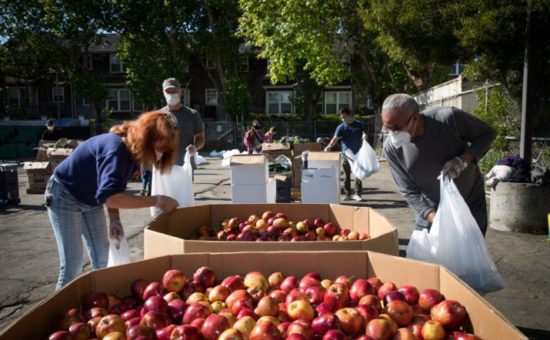
Masked volunteers pick out apples for meals that will be distributed to Food Bank recipients.
Due to the pandemic, the Food Bank has faced challenges related to an increase in demand and a decrease in volunteers. The organization typically collaborates with a network of more than 275 neighborhood food pantries to distribute food. However, in March, approximately one-third of the food bank’s partner pantries had to close temporarily as a result of safety concerns. Communications & Social Media Manager Keely Hopkins explains, “To ensure our participants did not lose access to food and we could meet the growing need, we opened pop-up pantries.” These ‘pop-up pantries,’ which are set up at 25 different locations and times throughout SF and Marin, optimize participants easy access to food. They serve 5 to10 times as many people as traditional neighborhood pantries.
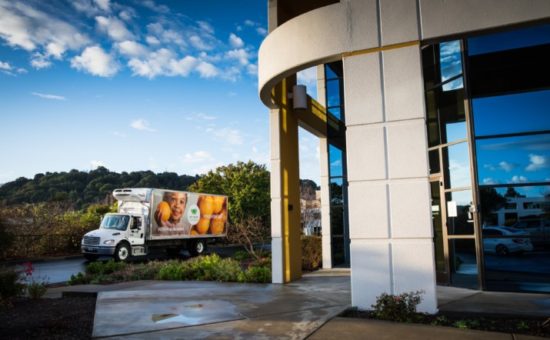
SF-Marin Food Bank truck transports food.
Pantry at Home is another initiative to ensure participants in the Food Bank network retain access to food. The temporary food delivery program serves 12,000 low-income seniors. According to Hopkins, “This ensures they can still get fresh groceries – like produce, grains, and protein items like meat or eggs – weekly while staying home and avoiding the risks COVID-19 presents to seniors.”
The Food Bank has also made major adjustments to its operational protocols to protect the health of employees and food recipients. Staffers reduced the number of volunteers working at their warehouse at any given time to ensure social distancing guidelines are being followed. Neighborhood food pantries are now pre-bagging groceries instead of operating a farmer’s market-style layout where participants pick out individual items, as they have traditionally done. This minimizes how many people touch the food and reduces the time participants spend waiting in line. What’s more, many pantries have switched to a drive-through model for picking up food, which offers an additional buffer against unnecessary person-to-person contact.

Food Bank participants wait 6 feet apart in line to receive food.
The SF-Marin Food Bank relies on donations and purchased food to meet the community’s needs. Two years ago, the Food Bank began its Farm to Family program that rescues fresh produce that would otherwise be thrown out by farms and instead gives it to the hungry. As a result of its success, Farm to Family has grown into a state-wide initiative.

The floor of the SF-Marin Food Bank warehouse reads “End Hunger.”
If you or anyone in your community needs access to food or could be interested in getting involved with the SF-Marin Food Bank here’s some information:
- Click here to find free food. Those who do not have internet access should call 211.
- Click here to learn how you can get involved with volunteering at the Food Bank today.
- Click here if you are interested in organizing a food or fund drive.
- Click here to donate to the SF-Marin Food Bank.
From San Francisco-Marin Food Bank:
Our mission is to end hunger in San Francisco and Marin. We envision a community where everyone is able to obtain enough nutritious food — in a dignified manner — to support the health and well-being of themselves and their families. Hunger is a serious problem in San Francisco and Marin. While the numbers are staggering, we believe that hunger in our community is a solvable problem. Since 1987, the Food Bank has pioneered many successful models aimed at ending hunger.

by Izzy Kowell | Jul 26, 2020 | Feature, General, News
San Francisco, CA. During the COVID-19 pandemic, the Mission Education Projects Inc. (MEPI) is still trying to provide its usual academic support and enrichment activities. This nonprofit, based in the Mission district is pictured above. MEPI provides tutoring, homework help, and other educational activities to students and their families in the community. Although the organization was unable to host onsite programming after the shelter in place order began, the staff continued to communicate with students and families through methods including Facetime, phone calls, emails, and texts. MEPI also began group Zoom sessions with students focused on homework and tutoring.
Lana Alviar, the Program Director at MEPI, discribes the daily Zoom sessions as a time where, “everyone – students, parents and other family members (the toddlers from the family) along with staff get together” and can “chat, hang out, have dance battles, play games, and share our feelings and fears about COVID-19.”
The nonprofit has also adjusted its annual End of School Year celebration. This year the 2020 End of School Year celebration took place as a Zoom party. Lana describes the event: “Prior to the party students received a goody bag with party favors and snacks for the party. We acknowledged our graduates from Kindergarten, 5th grade, and 8th grade who each received a cap and tassel, a class of 2020 sash, and a 2020 graduation medal. Students, parents, guests, and staff all joined in to honor our graduates. Our celebration included presentations, songs, riddles, and goody bags and ended with everyone sharing what they were grateful for.”

Kindergarten grad books for the End of School Year Party.
For MEPI’s summer program, the students received arts and crafts kits which included everything needed to complete the projects. Lana notes how “These projects are educational, fun, and stress relieving.”
During the pandemic, Mission Education Projects Inc. is helping students and families with supplies as well. Lana reports how during one of their Zoom sessions she asked students what they needed and was “surprised by the simple request they had – they needed paper, pencils, crayons, markers – things they could use to make drawings or write stories on as well as make origami and paper airplanes.” With the help of some friends, Lana was able to gather the requested supplies and drop them off to the families. A picture of staff packing up the supplies is pictured below. “We were also able to get food boxes dropped off to the families which included fruits, vegetables, eggs, chicken, and pasta.”
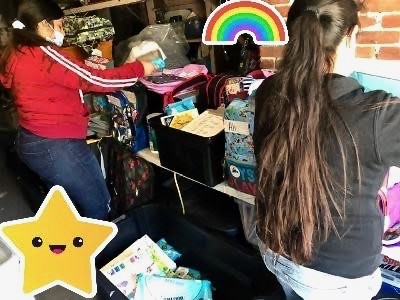
MEPI staff members pack supplies for kids and their families.
Lana speaks on how despite the difficulties COVID-19 has brought, the rewards of having a smaller program are shining through. All of MEPI’s Junior staff are former students themselves. “These students have grown up together and are very familiar with each other and with the staff” (Lana Alviar). Lana mentions how one of the best parts of the day is the end of day Zoom sessions with staff and students in which they’re able to check-in, talk about what they’re working on, and just hang out. “We have always been close with our students and their parents, but the COVID-19 pandemic has strengthened those relationships and brought us even closer and made us stronger as a group.”
From Mission Education Projects Inc:
If you’d like to support to Mission Education Projects Inc. the nonprofit could always use monetary donations. The nonprofits’ monetary donations have dwindled and MEPI is especially in need due to unexpected costs related to COVID-19.
“The mission of Mission Education Projects, Inc. is to provide at-risk youth & their families an equal opportunity to access a quality cultural sensitive & holistic educational and quality of the life experience involving every aspect of the child’s world of safe and empowering environment.”

by Morgan Saltz | Jul 25, 2020 | Coming Up, Feature, General, Lifestyle, News
Oakland, CA. It started out as a personal mission to inspire spirituality throughout her neighborhood for Jasmine Taylor (pictured above on the right). She launched the “Stepping Out on Faith” prayer walk in October of 2014 and that led to her founding a nonprofit called 1C13 Productions.
The strategy of continuing 1C13 Productions, especially with the youth, during the COVID-19 pandemic is an ongoing discussion within the organization according to Taylor. Because the nonprofit works extensively with youth through direct interaction within school settings, COVID 19 has halted its programs. However, 1C13 remains dedicated to creating and offering programs that allow interaction with the students while adhering to social distancing mandates.
Services within the organization include youth outreach, community events, feeding the poor, and providing resources for Oakland families to fight poverty and enrich their children’s future through The Legacy Program.
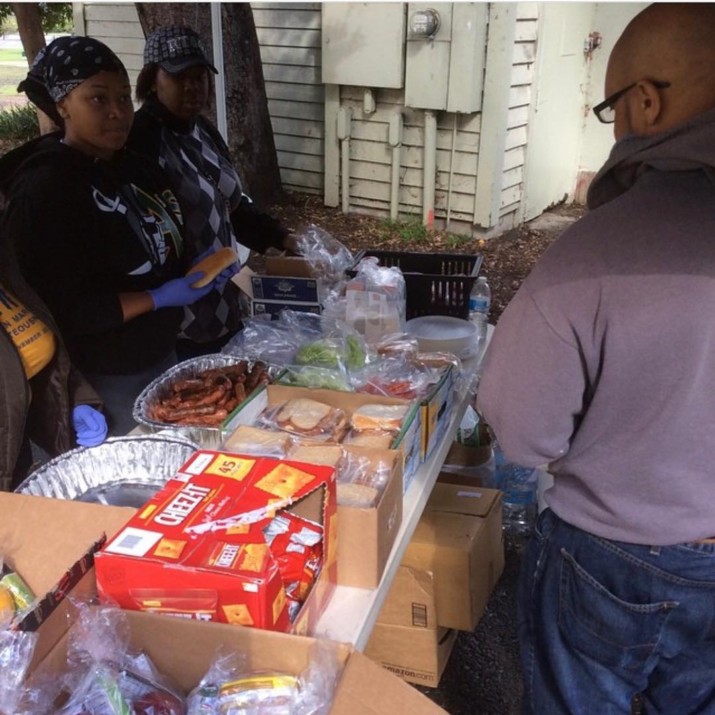
One goal of 1C13 Productions is to eradicate hunger in urban communities. Given the effects of poverty and gentrification, many men, women, and children in urban communities face hunger daily. The nonprofit regularly feeds the homeless and is planning on expanding these efforts.
While initially focused on community programs,1C13 provides several programs for the youth of Oakland to acquire the skills which will bolster their confidence and create positive opportunities. The Walking in Royalty program exposes youth to many different disciplines of study and career opportunities to encourage the young people of Oakland to recognize their full potential and ensures a well-rounded exposure to different career possibilities.

Occasionally working directly with schools to provide life skills classes for both the youth and families through the Walking in Royalty programs, 1C13 also offers these programs to the public through the King/Queen Connections program. Taylor, who also holds the position of Restorative Bridge Maker at Frick United School of language to diffuse conflicts between students, describes her work with the youth as “the most gratifying” and a “beautiful and humbling opportunity”. The testimonies given from some 1C13 youth confirms their reciprocal admiration for the program and their mission; “(The Life Skills) class has changed me in many ways. It’s encouraged me to never give up. It taught me to be a young lady. It taught me to never let what other people say affect my future and who I want to be.” – Mia C., 8th grade.
From 1C13 Productions:
1C13 Productions Inc. is a pillar in the community and has created a lasting impact on youth, communities, and families throughout its 5-year tenure in the Bay Area and in its schools. Here are testimonials from some of those we’ve had the opportunity to work with.
“Jasmine Taylor has the best job in the world: empowering young kings and queens of East Oakland to live their truth and nurture their brilliance. As a teacher and trauma-informed student mentor at Frick Impact Academy, “Ms. Taylor” heals interpersonal harm through her expertise in Restorative Practices and leads students in deconstructing the forces of oppression in their lives and communities as they foster resilience, confidence, and integrity.”
by Satchi Metaxas | Jul 22, 2020 | Feature, General, News
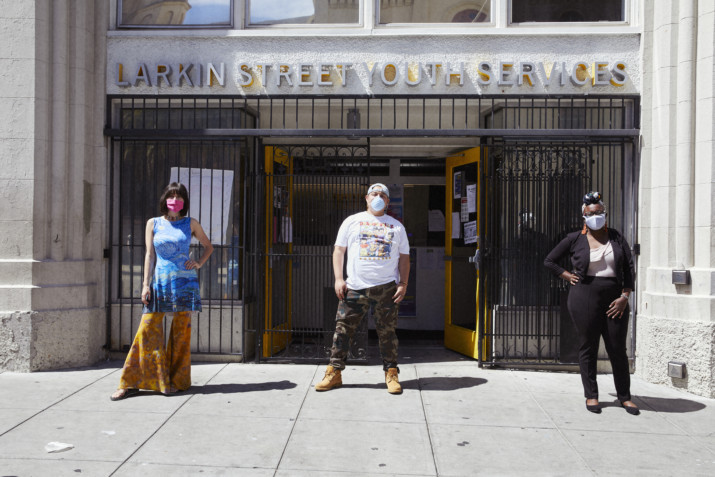
San Francisco, CA. Sheltering at home is the most effective way to stop the spread of COVID-19, but for 1,100 homeless youth in San Francisco, it is impossible. On April 29, Larkin Street opened a new Shelter In Place Hotel in collaboration with the City of San Francisco. Site #1, as it is known, can house up to 55 people and is available to homeless youth aged 18 to 30. This is one of many solutions Larkin Street is using to provide shelter for SF youth, and in doing so, fight the spread of COVID-19.
Larkin Street Youth Services is a non-profit that provides housing, health services, and educational and employment support to homeless youth. The organization has found ways to provide essential services despite temporary facility closures. Larkin’s two drop-in sites, where homeless people can access free meals, hygiene supplies, bathrooms, and other services, are continuing to operate under social distancing guidelines. However, the nonprofit’s traditional housing services have been scaled back in light of San Francisco’s social distancing guidelines. The Lark-Inn Shelter for 18 to 24-year-olds is temporarily closed and the “Diamond Shelters”, homes for homeless minors, are operating at a reduced capacity.
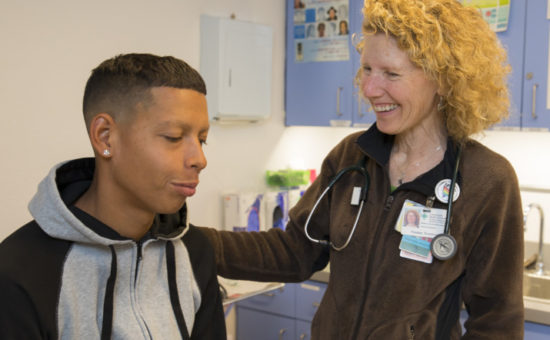
A health worker and patient smiling at a Larkin Street clinic.
Larkin Street has been able to put more people into its Rapid Rehousing rental subsidy program as the number of available apartments grows and the price of rentals in the City falls. Rapid Rehousing is part of Rising Up, a massive effort started by San Francisco Mayor London Breed in October 2018 to reduce homelessness for youth age 18 to 24 by 50% by 2023. The ambitious Rising Up initiative combines city and non-profit resources to provide housing, education, employment, and health services to San Francisco’s homeless youth. The program’s goal is to get 950 youth off of the streets by December 2022.
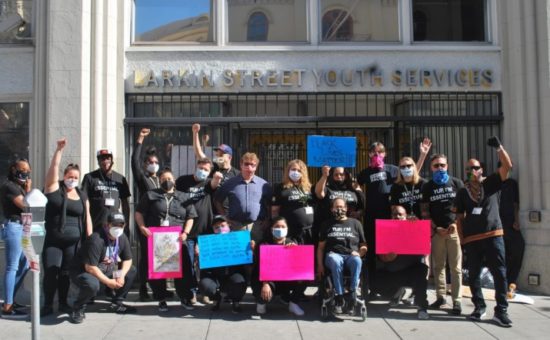
Black Lives Matter protesters posing in front of Larkin Street building. (Photo from Larkin Street Youth Services Facebook)
Furthermore, a “Safe Sleeping Village” is now available for homeless people living out of tents in San Francisco’s Haight-Ashbury neighborhood. The “village” has room for 37 tents, each spot marked on the pavement a safe distance from neighboring tents. Residents have access to sanitation facilities, food, water, and health services. This initiative is in part a response to the high number of unsanctioned encampments that have been popping up in public areas since the statewide shelter-in-place order.
Larkin Street has adapted its educational and career-building services as well. Although Larkin Street Academy counselors can no longer meet in classroom settings, they are still meeting individually with youth. In light of the economic downturn, Larkin Street is increasing their support of people looking for employment and accessing government stimulus checks.

From Larkin Street Youth Services:
Since 1984, Larkin Street Youth Services has given more than 75,000 young people a safe place to rebuild their lives. We provide housing, education and employment training, and health and wellness supports to help these young people get off the street for good.
by Mackenzie Herring | Jul 21, 2020 | Feature, General, News
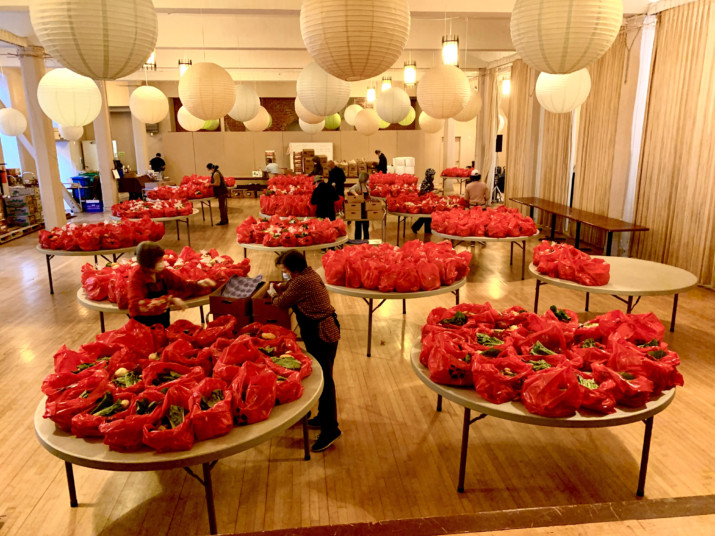
San Francisco, CA. Despite periods of increased demand, and the nonprofit being understaffed, Groceries for Elders continues to serve the community during the pandemic. The team of organizers and volunteers are pictured above packing bags of groceries recently for needy seniors.
Program Director, Tom Beaver, said that the nonprofit was born out of adversity and that the service provided has been uninterrupted during the health crisis.
“Groceries for Seniors is a 501c3 non-profit that has been operating since1999,” Beaver said. “It was founded by John Meehan who had an impoverished upbringing and at one point was in prison for minor theft infractions during a period when he was drug dependent. He transcended those circumstances and went on to found the Haight Ashbury Soup Kitchen in 1983. In 1999, the program became Groceries for Seniors. Every week, we home deliver over 1000 overflowing, wholesome free bags of groceries to low-income senior apartment dwellers throughout San Francisco, CA.”
Seniors are at high risk for having complications if they contract COVID-19, and for those who rely on this service for groceries, their financial situation and their health can be jeopardized if they shop for their own groceries.
According to Beaver, the nonprofit had a dramatic drop in volunteers during the early months of the pandemic. For an organization that relies heavily on its volunteer base, this can dramatically affect the community in which they serve. Many buildings have also asked for additional bags at this time, going from 1000 to 1300 bags.

Groceries for Seniors provides bags of food for elders in San Francisco.
When asked how others are able to help Groceries for Elders, Beaver said this:
We are a very land organization. We have only four part-time employees and their salaries equal less than 10% of our overhead. In fact, for every $1 donated to us we are able to assemble and deliver 8 huge bags of groceries to our recipients. We are supported by in-kind donations from Old Saint Mary’s Cathedral who provides their auditorium where we do our work as well as donations from three Grocery Stores which adds to the food we are able to deliver. However, we do have overhead costs that we can’t avoid: our one delivery van, the bags we pack the groceries in, van and worker’s comp insurance, etc. and we do need help with those expenditures.
From Groceries for Elders:
Groceries for Elders accepts Tax Deductible donations in the following manner:
1). Checks, money orders, etc. can be sent directly to the nonprofit at the following address:
Groceries for Seniors
c/o Old Saint Mary’s
660 California Street
San Francisco, CA 94108
2). You can donate through the NETWORK FOR GOOD – a national organization that processes donations for non-profits. There are access points on our website: www.groceriesforseniors.org
NOTE: for a good look at what groceries for elders does, please see the FACEBOOK page at:
https://www.facebook.com/GroceriesForSeniors