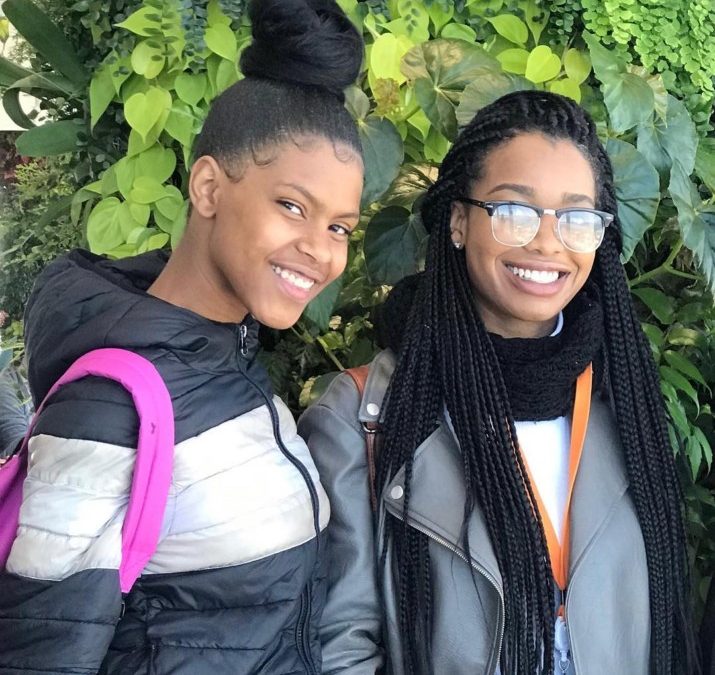
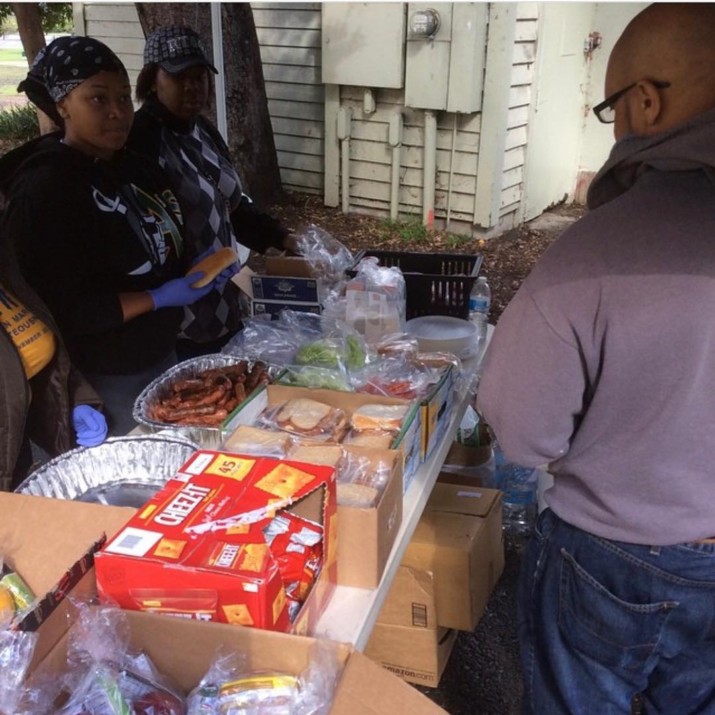
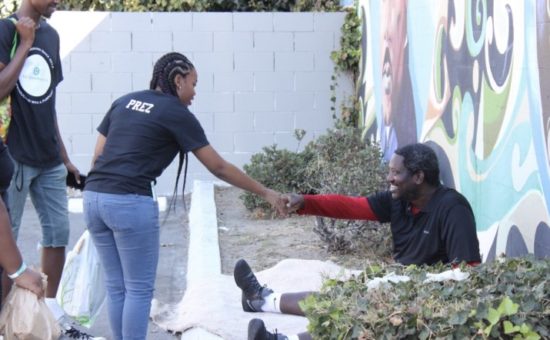
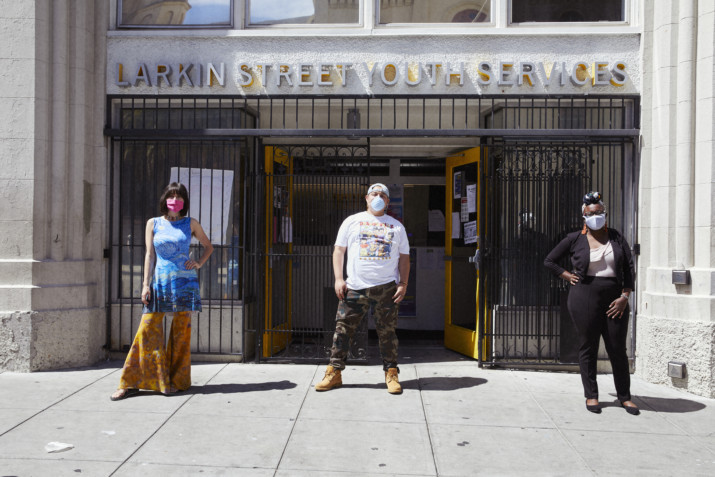
Berkeley, CA. Berkeley Food Network, a middleman between large food sources – such as food banks or markets –and community distributors, has more than tripled its community impact in just two months. According to the nonprofit’s Executive Director Sara Webber, “With COVID we went in two months… from serving 1,600 people a week to 5,000 people a week.”
When it was founded in 2016 by Sara Webber, Dona Boatright, Chuck Fanning, and Kate Campbell King, the Berkeley Food Network worked it’s way up to serving around 300 food-insecure people. In two years, thanks to partnerships with community organizations like Head Start, senior and medical centers, as well as the Alameda County Food Bank, that number grew to 1,600. But the Coronavirus outbreak and California’s shelter-in-place order “completely changed our operations,” Webber notes. “We’re saying it’s our silver lining.” And indeed, the pandemic has given people who may be reluctant to ask for free food the push they need to accept help.
Berkeley Food Network employees pose for a photo pre-COVID-19.
An essential part of the Berkeley Food Network’s model is destigmatizing food handouts. At the nonprofit’s farmer market-style pantries, staff shop alongside food insecure people, taking just a few items. The goal of this is to normalize free food, and the strategy works; customers feel more comfortable and participate more. Since the shelter-in-place order, the Food Network has shifted from running pop-up pantries at convenient times and locations for families to delivering pre-packed grocery bags to community partners. One such partner is Headstart, a preschool for low-income children that is run by the YMCA. Once a month the Berkeley Food Network sets up a food pantry at Headstart from three to five in the afternoon, so parents can easily access free food while they are picking their kids up. Although Headstart was forced to suspend its program due to COVID, BFN has found numerous new community partners.
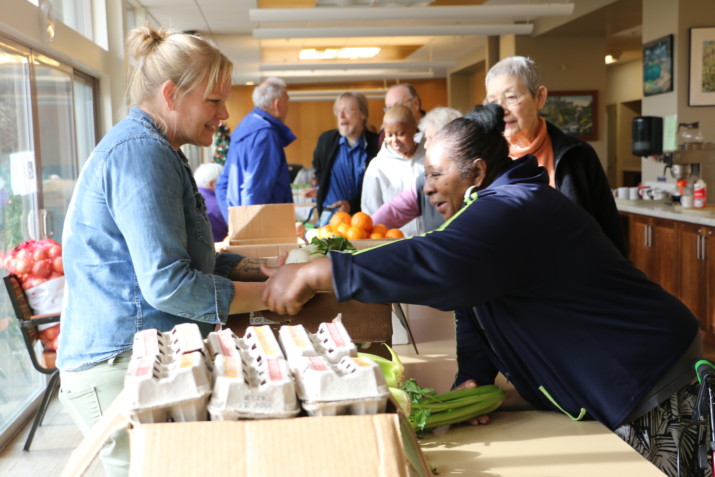
A mother and daughter pick food from a BFN pop-up pantry prior to the onset of the pandemic.
Despite the many organizations devoted to feeding the hungry in and around Berkeley, “There are a lot of people falling through the holes,” according to Webber. That is where BFN comes in. They work with partner organizations in the community to get food where it is most needed. Research by the Food Network shows that 24,000 Berkeley residents were food insecure pre-COVID-19. However, only 6,000 of them had access to regular food assistance. It is the Berkeley Food Network’s mission to close that gap by developing strong and collaborative community partnerships to reach each of those 24,000 people with healthy food.
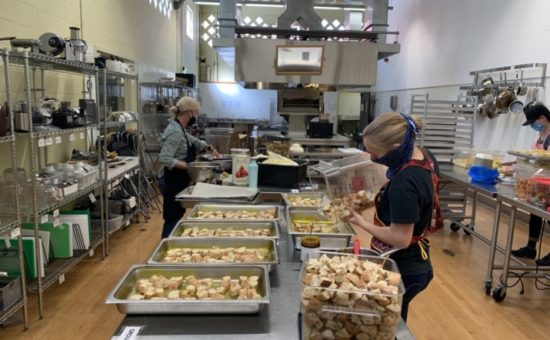
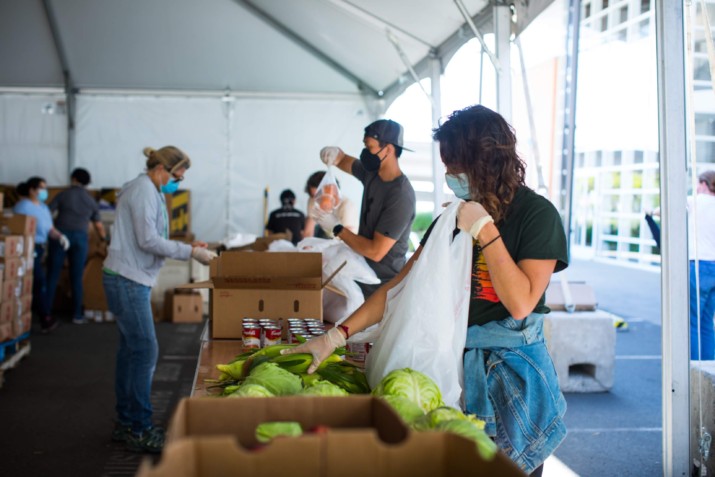
Masked BFN workers sort food to be distributed to families.
Healthy food is a hallmark of Berkeley Food Network. They never distribute sugary drinks or foods – most of their produce is sourced from hyper-organic community gardens like King Middle School’s Edible Schoolyard and Urban Adamah. In addition, BFN receives donations from personal organic gardens. To fill in the cracks, BFN’s food recovery program sources food from local businesses that would normally throw away imperfect, but perfectly healthy, produce. Packages typically contain food for an entire family to eat three meals.
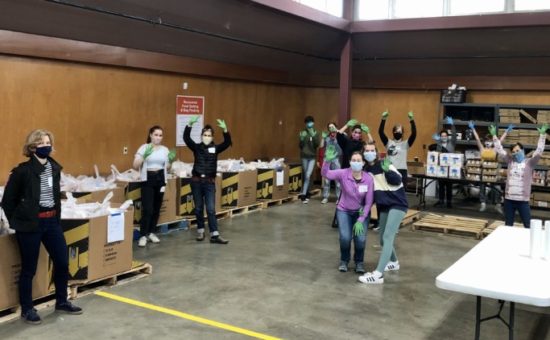
BFN warehouse workers pose for a masked photo.
If you are interested in getting involved with Berkeley Food Network:
From Berkeley Food Network: Did you know that 1 in 5 Berkeley residents are not able to put enough food on their tables to live healthy, hunger-free lives? The Berkeley Food Network was founded in December 2016 with the goal of ending hunger in Berkeley. We have an innovative mix of community-centered and collaborative programs to get healthy, nutritious food to the people in Berkeley who need it. At the heart of this work is our food sourcing and distribution hub operating out of our warehouse. We source food from the Alameda County Community Food Bank and local food businesses that is later distributed to Berkeley residents. The graphic below outlines specifically how our community-centered approach operates to end hunger in Berkeley.
Oakland, CA. As the world adjusts to the pandemic, Wardrobe For Opportunity has had to close its office and create virtual programs to continue its mission to assist low-income individuals, people of color, and immigrants with not only job placement, but skills in long term career development. The organization provides several empowering programs to aid clients in professional visual appearance, job placement, long-term career development, and education in financial literacy. The impact of COVID has expanded Wardrobe for Opportunity’s clients, as many have lost employment and are in need of career services.
Founded in 1995, Wardrobe for Opportunity (WFO) began as a service for low-income women to receive professional attire but has since greatly expanded its programs to include all gender identities. Executive Director Hannah Quan identifies a program called Navigate as one of the organization’s most successful programs. “Last year we saw twice as many people graduate from the program as we expected, and this year we are on track to double that number again. The program is intended for people who are unemployed and looking for work, and we are now hearing from people who never expected to find themselves in this situation due to COVID-19.” The program offers training not only for those newly entering the job search but the program now services an entirely new demographic. Navigate also partners with organizations such as Beyond the Gates and Center for Employment Opportunities which work with both adults and youth reentering the population from incarceration. Quan says for some of these men and women, the Professional Attire Service is the first step and is one of the most personally rewarding to see. “The styling appointment is often the first time they see themselves as capable and deserving of a professional career.”
Racial and social injustice is also a focus of WFO and the nonprofit advocates for those causes. Though not a public advocacy organization, Quan explains how WFO works to fight injustice and inequality in the workplace in other ways; “When it comes to equal pay for equal work, we know that black, indigenous and people of color (BIPOC) by and large earn less than their white counterparts, and our client base is reflective of that inequality. Our programming covers ways that clients can advocate for themselves in the workplace, whether it be for higher pay, a better job title, increased benefits, or better overall treatment.”
Graduates from Wardrobe For Opportunity’s Catapult Program, focusing on long-term career planning and economic self-sufficiency.
The pandemic has left many without employment and Wardrobe for Opportunity has tirelessly worked on online strategies to continue to provide support and education for clients. Staffers serve the Bay Area community with not only professional attire to be visually prepared for the job search, but they go beyond job placement to build careers, self-confidence, and stability. As it celebrates its 25 years in service, Wardrobe For Opportunity will not allow COVID to stand in the way of its mission.
From Wardrobe For Opportunity:
We acknowledge the shifting demographics and increasing cost of living in the Bay Area and provide workable strategies to the low-income residents that remain. WFO’s strategic plan addresses the needs of low-income clients to succeed in building a life that is sustainable for their future. I hope you will join and support us as we transform lives throughout the Bay Area.
San Francisco, CA. Sunset Youth Services‘ central philosophy is that cultivating healthy attachments with stable and caring adults is the best way to support youth and young adults on the precipice of the criminal justice system. SYS works with young people aged 14 to 24 – as well as their families – in a multitude of different capacities: providing digital arts resources, workforce development, justice and mental health services, and family support. Although the COVID-19 pandemic has forced SYS to close its Youth Center and adapt many services to an online format, staffers continue to center their efforts on relationship-based support for the community.
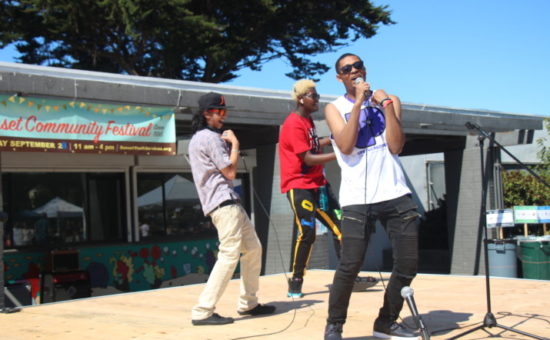
Youth perform at Sunset Festival prior to the COVID-19 pandemic.
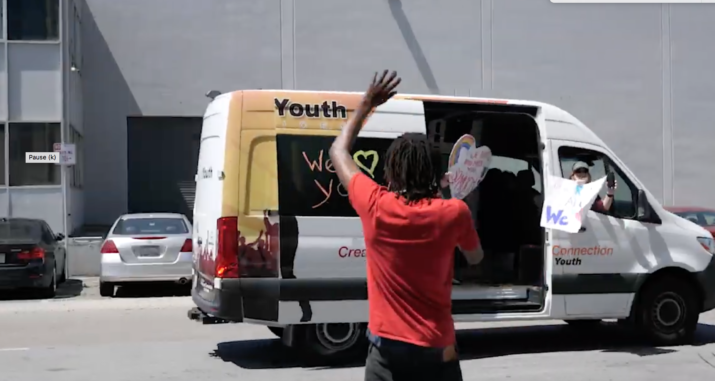
In the early weeks of California’s shelter-in-place order, SYS began weekly ‘Love Parades.’ Employees made signs bearing encouraging messages, piled into their cars, and drove by the houses of families they serve, honking and shouting, “We love you!” and “We’re in this together!” SYS’s commitment to the mental wellbeing of the families served is palpable in the video below of a ‘Love Parade.’
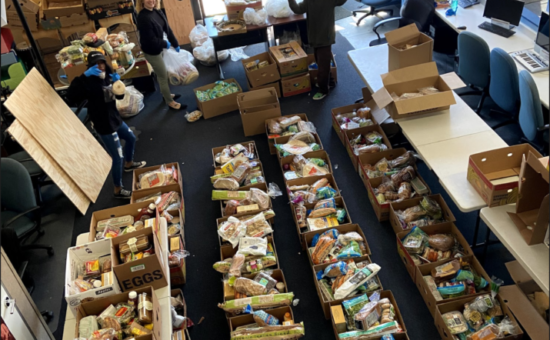
In addition to these weekly shows of support, Sunset Youth Services, in partnership with the San Francisco Marin Food Bank, Dine11, and World Central Kitchen, delivered over 2,000 meals a week to program families during the beginning stages of shelter-in-place. According to Development and Communications Associate Melissa Laureta, SYS “continues to distribute food boxes,” although staffers and volunteers have reduced the number of meals they deliver. This initiative is made possible because of food donations from Trader Joes and the SF-Marin Food Bank.
SYS employees prepare to deliver meals to families in need.
Sunset Youth Services’ Digital Arts program is a cornerstone of the nonprofit’s efforts to cultivate community with SF youth both inside and outside prison. Young people come to SYS’ Youth Center to produce music and videos, write songs, and learn similar marketable skills from industry professionals. SYS began bringing its Digital Arts program into juvenile hall and jails so that in the process of creating music, incarcerated youth form relationships with Sunset Youth employees. Once out of jail, those connections facilitate their reentry into society by connecting them to the wealth of services that SYS provides, such as a highly successful Workforce Development program. Almost 90% of the youth who graduate from this program land a job. At the junction between Digital Arts and Workforce Development is Upstar Records: a youth-led record label that cultivates young hip-hop enthusiasts into digital technology professionals.
A singer performs with a group associated with Upstar Records during pre-COVID-19 times.
SYS’s programs are structured around the research-driven concept of attachment communities: groups that provide connectedness and foster healthy, trusting relationships between volunteers and youth. Many young people lack stable relationships in their lives, which is believed to be a root cause of issues like depression, anxiety, and mental illness. Even before research released by The Commission on Children at Risk in 2005 identified attachment communities as the definitive response to myriad behavioral and mental health issues in youth, SYS had already formed its own relationship-based community in San Francisco. Instead of compartmentalizing the services they offer, SYS ensures a teen can walk into the building and have access to any of five programs. At the Youth Center, youth and young adults can make music or beats, meet with mental health professionals, case managers, and receive support caring for a young child. Laureta explains, “Youth can come into our center and hit all five of our programs and still maintain community within our family.” This idea of ‘family’ is at the core of all Sunset Youth Services programs.
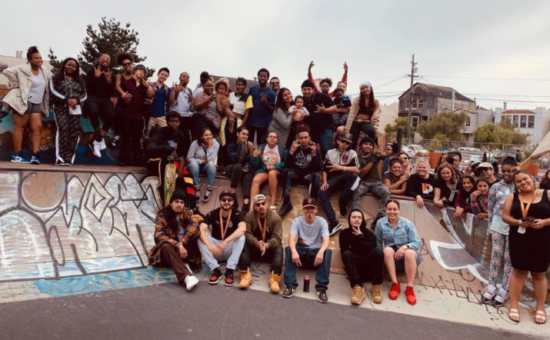
Sunset Youth Services at the Playland BBQ in 2019.
Anyone interested in volunteering with Sunset Youth Services should contact Melissa Laureta at [email protected] for more information. Keep in mind, however, that Sunset Youth Services’ dedication to forging enduring relationships between volunteers and youth make getting involved more complicated than some might think. Laureta says, “We are pretty tight gatekeepers of our youth community because there’s a lot of abandonment stuff and mental health stuff with our kids. When we have volunteers who parachute in and out, abandonment issues arise rally fast. So we need dedicated volunteers to stick with a kid or a cohort of kids for weeks and months and be committed and show relationships are stable because they don’t get that from other places in their lives.”
From Sunset Youth Services: The mission of Sunset Youth Services is to foster long-term stability and growth in in-risk* youth, young adults, and families through caring relationships and supportive services. This goal is based on the simple belief that youth are inherently worthy of dignity and respect and have the potential to positively contribute to their communities when their real needs are met.
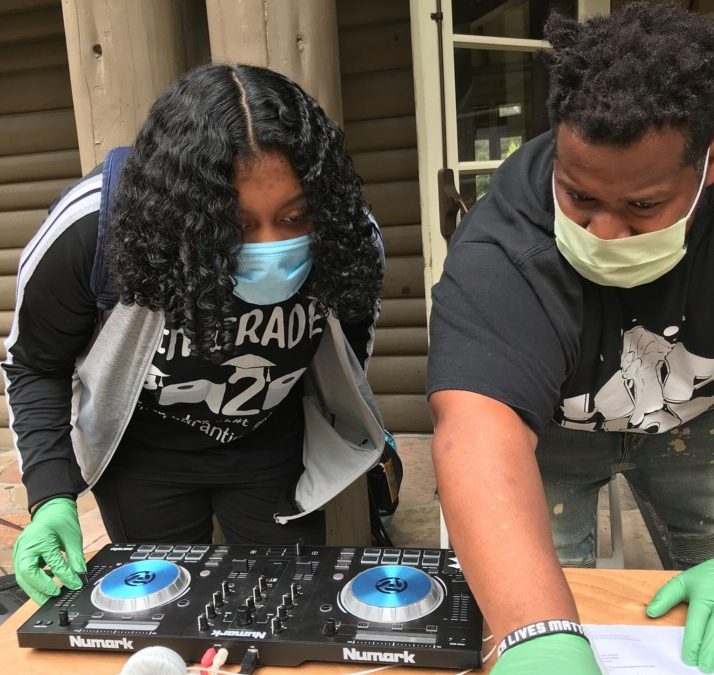
Oakland, CA. The beat goes on at Hip Hop for Change during the COVID-19 pandemic. Marlon Richardson, (above) is a Hip Hop educator who finds ways to continue working with marginalized youth and adults. While the historic Black Lives Matter (BLM) protests in the wake of George Floyd’s death are heightening awareness about racial and social injustice, artistic expression in the form of Hip Hop music has long been an outlet to critique unjust power relations. The emergence of Hip Hop culture in the 1980s impacted both social progress and individual growth. It was also the foundation for the nonprofit organization, Hip Hop for Change.
Founded in 2013, Hip Hop for Change offers programs to educate, support, and inspire both the youth and adults of Oakland. Executive Director Khafre Jay emphasizes the importance of working with urban youth who are dealing with discrimination and violence as a part of their everyday lives. Hip Hop for Change has implemented THE MC Program (Theory of Hip Hop Evolution, Music, and Culture) and has expanded the program to connect the youth to artist-educators who are trained to mentor and motivate young artists in the pursuit of their artistic aspirations. The program is not only for the youth; the artist-educators benefit from the training and employment provided by Hip Hop for Change. Khafre Jay emphasizes the impact of the program; “Since its inception, THE MC Program has touched the lives of over twenty thousand K-12 students, employed and trained dozens of local artist-educators, and half of our programming has provided for free to underserved youth. This program alone is one of the best reasons to support our organization’s work.” Not only the Executive Director for Hip Hop for Change but an established Oakland hip hop artist, the mission resonates personally for Khafre Jay; “Hip Hop is a very empowering culture. It provides an expressive space for youth of color as well as a constant pull towards self-affirmation, and ideas of self-esteem, and self-efficacy. For a lot of POC youth, the first time they find themselves experimenting with self-worth is through Hip Hop expression, and I was no different growing up.”
Executive Director Khafre Jay also holds a radio show on KPOO and is founded by Poor People’s Radio. The mission is to bring public news to the “disenfranchised and underserved”.
Grassroots activism has been intrinsic to Hip Hop for Change. Khafre Jay explains that “grassroots activism allows us not to have to code-switch as an organization.” He explains that a nonprofit such as his, which is Black-led and culturally focused, is not valued by the predominantly homogeneous decision-makers of white males that can provide funding. Therefore, receiving funding is difficult. However, Hip Hop for Change has had success through the Grassroots Jobs Program that not only spreads its mission statement to the community but provides employment, education, employee development, and connects their employees with community activism. As Khafre Jay explains; “Grassroots activism allows us to create hundreds of jobs and employ people in our village while engaging and informing the public about race and social justice. We couldn’t be as effective as Black and Brown people in this country without grassroots tactics.”
Employees for the Grassroots Jobs Program who are dedicated to fighting racial and social injustice
The Grassroots Jobs Program has suffered from the global pandemic as Hip Hop for Change was forced to furlough employees, and further setbacks came as school contracts ended due to COVID. Yet Hip Hop for Change continues to create ways to bolster their community. The organization is transitioning to online educational programs and creating new services such as free music production to youth under 25. In spite of the current global crisis, Hip Hop for Change is dedicated to social and racial activism, educating the youth on the history and significance of hip hop culture, providing resources for aspiring artists, and developing employment opportunities for the people of Oakland.
From HipHopForChange:
HipHopForChange seeks to address injustices of representation through education, community building, and the creation of a platform for people who identify with Hip Hop culture to express their true voices, selves, and culture. We create a space that emphasizes and encourages the root values of Hip Hop culture: peace, love, unity, and having fun.
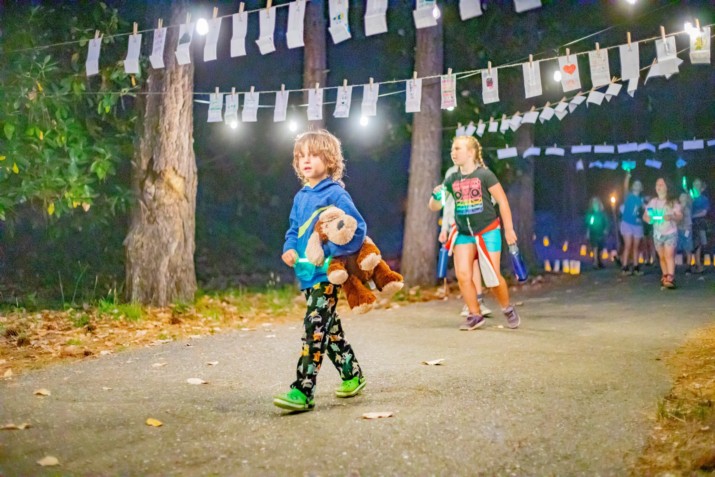
Berkeley, CA. Anyone who has watched a loved one battle cancer knows the immense burden it forces upon the entire family. Kesem is a nationwide community dedicated to supporting children through and beyond their parent’s cancer, such as the campers in the photo above. Kesem means “magic” in Hebrew, although the camp is open to any child whose parent has been diagnosed with cancer, regardless of religious or ethnic background. Passionate college students at 132 Kesem chapters nationwide run a free week-long summer camp for kids in this unique position. This year, however, in accordance with Kesem’s national leadership, camp is taking place online for Camp Kesem Berkeley and Stanford.
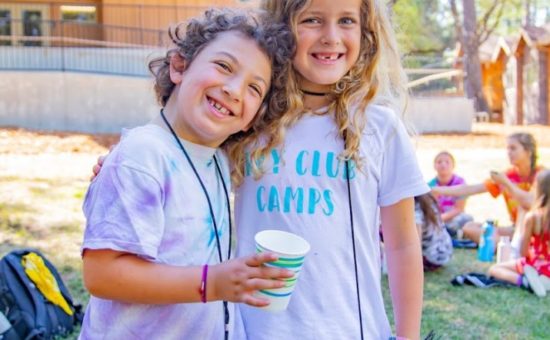
Camp Kesem Berkeley campers embrace at camp last summer.
When the statewide Shelter-in-Place order went into effect in March, it became increasingly clear that camp could not go on as normal. Individual Kesem chapters and Kesem National had to pivot in order to re-imagine activities for ‘Kesem at Home,’ Kesem’s first ever online program. UC Berkeley Kesem Co-Director Tatum Sandzimier says, “We have … packaged over 150 Kesem at Home kits that include all the supplies necessary to participate in a week of camp.” These kits include t-shirts and friendship bracelet strings, among other interactive supplies, and were mailed to campers’ houses prior to camp. In addition, Kesem Berkeley has contacted each camper’s family to ensure that they have internet and computer access. For those without smart devices, they have provided parents with templates to assist in contacting local schools to borrow computers for their kids use in Kesem At Home.
Two Berkeley counselors pose with a camper during Lake Day 2019.
Stanford’s week ‘Kesem at Home,’ occurred earlier in the summer, and Berkeley’s two weeks began August 1st. Although some classic camp experiences are difficult to replicate online, leadership at Kesem Berkeley and Stanford have invested immense energy into planning fun and interactive activities. Instead of kayaking at Lake Day, throwing paint and colored powder during Messy Olympics, or singing camp songs at Campfire Night, ‘Kesem at Home’ includes activities ranging from “high intensity dance parties … to more emotional sharing sessions,” according to Stanford University student and Co-Director of Camp Kesem Stanford, Sydney Brown.
Like all Kesem counselors nationwide, Brown uses a camp nickname. In her case: Peanut Butter. Berkeley Co-Director Sandzimier says she is involved with Kesem for “The chance to be ‘Big Three’ – the best version of myself.” For many counselors, their camp name is more than a silly word, favorite food, or cartoon character – it is an alter ego, a reminder that their most selfless and joyful self is their camp-self.
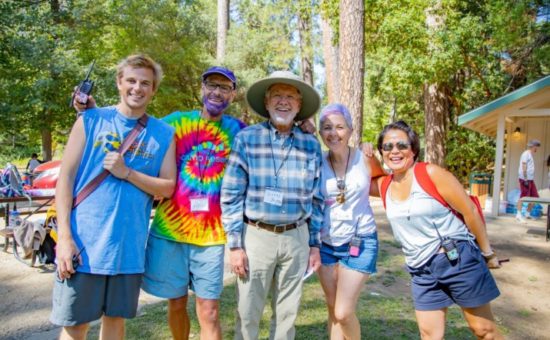
Camp Kesem Berkeley nurses and mental health professionals pose on the recreation field at camp during Summer 2019.
Kesem is more than just a one week-long camp; it is a year-round community. ‘Kesem By Your Side’ is a program started by Kesem student leaders at Cal to stay in touch with their campers during the school year. They do this through letters, as well as phone and video calls. Stanford Kesem implemented a similar ‘Pen-pal’ program this year, which Brown says has been “hugely popular.”
Camp Kesem Berkeley’s largest annual fundraiser, Make the Magic, was supposed to happen March 14th but was canceled just days prior due to the pandemic. The Make the Magic gala normally helps CK Berkeley raise over half of its annual fundraising goal. Although that wasn’t possible this year, Berkeley was still able to support nearby Kesem chapters in fundraising for their ‘Kesem at Home’ programs – in addition to planning their own.
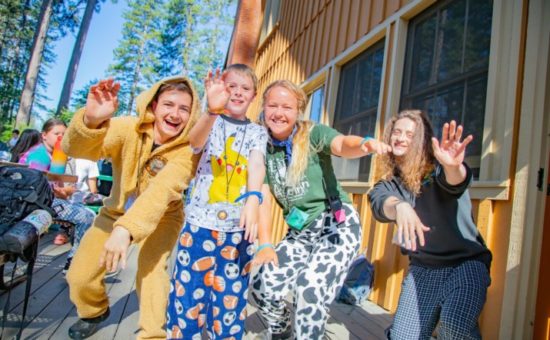
Berkeley counselors pose with a camper during ‘Pajama Breakfast.’ (Summer 2019)
According to Sandzimier, “Kesem has shown me the power of love, community, and vulnerability. It has given me my best friends, [and] biggest role models.” Ask any college student who has been to Kesem and you will likely hear a similar story of praise. Brown remarked, “Kesem balances love with light in a delicate way – it’s truly unlike any other community in the world.” That duality is exactly what makes Kesem so special. Kids are allowed to be kids and forge deep and lasting relationships with each other simply through the common hardships they have endured. Kesem isn’t a normal summer camp, and it certainly isn’t a counseling group; it is a community where love and understanding grow organically and abundantly. The name ‘Kesem’ seems apt considering the magical impact it has on both kids and counselors’ lives.
Campers line up by unit at Stanford Kesem during camp last summer.
If you are a college student interested in joining Kesem, click here.
Disclosure: The author of this story, Satchi Metaxas, has been a camper at Camp Kesem Berkeley for the past decade.
From Camp Kesem: Kesem is a nationwide community, driven by passionate college student leaders, that supports children through and beyond their parent’s cancer. Kesem is the largest national organization dedicated to supporting children impacted by a parent’s cancer, at no cost to families. Our innovative and fun-filled programs provide children with peers who understand their unique needs, and create long-lasting impact.
Here’s a video about the program:
99% of parents feel their child benefited from attending Kesem.
98% of parents would recommend Kesem to other families impacted by cancer.
96% of parents intend to send their child back to Kesem each year.
86% agree their child seems more confident in their ability to address their cancer experience after Kesem.
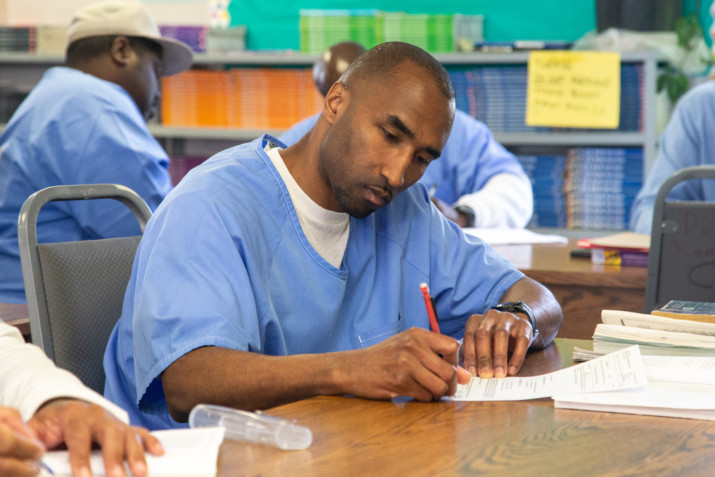
San Quentin, CA. Prison populations across the U.S. have been hit hard by COVID-19. At San Quentin State Prison, the Prison University Project is trying to provide material and emotional support. The Prison University Project is a nonprofit working to expand access to higher education inside the California prison system. Due to COVID-19, all programming that is considered non-essential has been suspended, this includes the college classes offered by Prison University Project. However, the organization is taking on other projects to support the San Quentin prison community.
In recent weeks, the Prison University Project has coordinated the installation of mobile showers for corrections staff to help mitigate the possible spread of COVID-19.
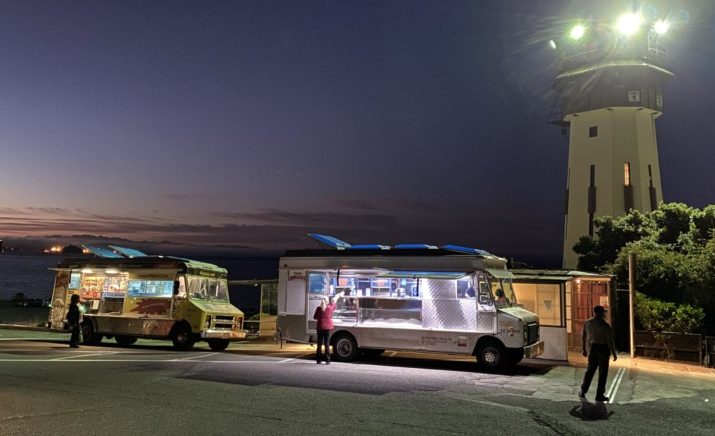
The Prison University Project also provides food trucks that allow staff to grab something to eat before or after their shifts.
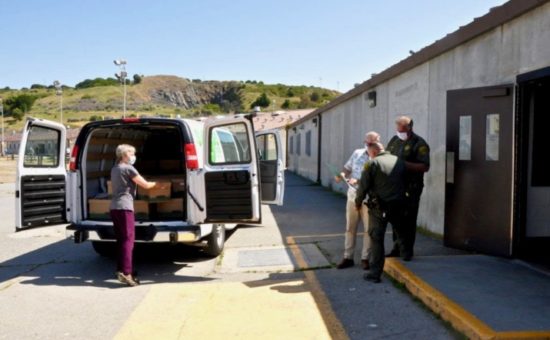
Efforts to assist staff during the pandemic is just one of the initiatives the Prison University Project has taken on. The organization’s outreach notes, “Most notably, we coordinated the successful deliveries of care packages to the entire populations of San Quentin and Avenal State Prisons. […] San Quentin’s leadership has also allowed us to send magazines, textbooks, art supplies, hand-crank radios, and digital content (via closed-circuit television) to people on death row and other areas of the prison outside of the general population areas.”
Prison University Project unloads care packages. (Photo credit, Lt. Sam Robinson)
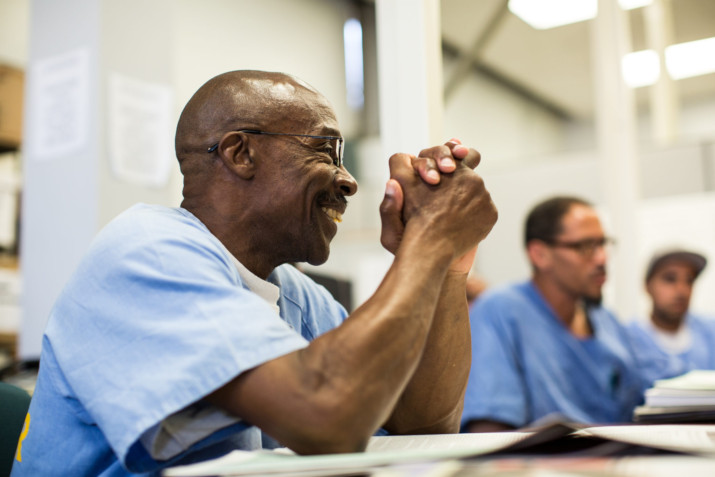
Prison University Project student and Senior Editor of the San Quentin News, Juan Moreno Haines (pictured above) has emerged as a voice of the incarcerated during the COVID-19 crisis.
Juan Moreno Haines’ published pieces with information about what’s happening inside San Quentin during the COVID-19 pandemic can be seen at this link: https://theappeal.org/authors/juan-moreno-haines/
From the Prison University Project:
Here’s how to help incarcerated individuals at the moment. Increasing visibility of both formerly and currently incarcerated individuals by sharing and supporting their “advocacy efforts and publications widely” is one way in which people on the outside can help. Donations to the Prison University Project’s general operations and to its Covid-19 Care Package Initiative, both of which are linked here, are also useful. Additionally, donations to organizations such as Bonafide are appreciated. Bonafide helps individuals inside prepare for release and supports them when they leave the prison by providing essential supplies including cell phones and clothing.
The mission of the Prison University Project is to provide an intellectually rigorous, inclusive Associate of Arts degree program and College Preparatory Program, free of charge, to people at San Quentin State Prison; to expand access to quality higher education for incarcerated people; and to foster the values of equity, civic engagement, independence of thought, and freedom of expression.
San Francisco, CA. The economic turmoil caused by COVID-19 has heightened another life-threatening issue: food insecurity. Fortunately, food banks such as the San Francisco-Marin Food Bank (pictured above) are rising to the occasion. In recent months, the SF-Marin Food Bank has nearly doubled the number of households it serves. Prior to the COVID-19 outbreak, the nonprofit provided meals to about 32,000 families per week. Now, the Food Bank serves 1,164,155 meals to around 60,000 families weekly.
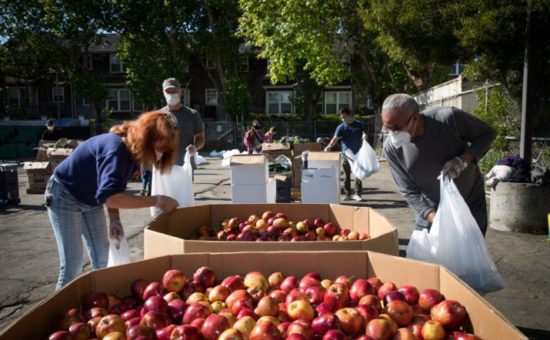
Masked volunteers pick out apples for meals that will be distributed to Food Bank recipients.
Due to the pandemic, the Food Bank has faced challenges related to an increase in demand and a decrease in volunteers. The organization typically collaborates with a network of more than 275 neighborhood food pantries to distribute food. However, in March, approximately one-third of the food bank’s partner pantries had to close temporarily as a result of safety concerns. Communications & Social Media Manager Keely Hopkins explains, “To ensure our participants did not lose access to food and we could meet the growing need, we opened pop-up pantries.” These ‘pop-up pantries,’ which are set up at 25 different locations and times throughout SF and Marin, optimize participants easy access to food. They serve 5 to10 times as many people as traditional neighborhood pantries.
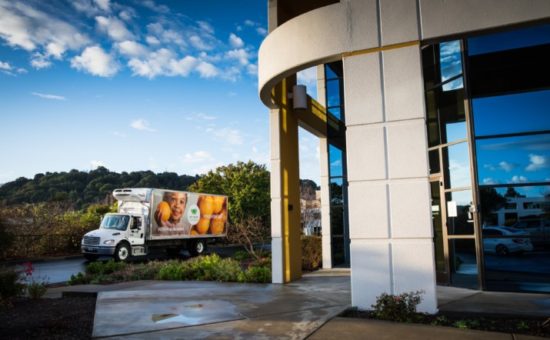
SF-Marin Food Bank truck transports food.
Pantry at Home is another initiative to ensure participants in the Food Bank network retain access to food. The temporary food delivery program serves 12,000 low-income seniors. According to Hopkins, “This ensures they can still get fresh groceries – like produce, grains, and protein items like meat or eggs – weekly while staying home and avoiding the risks COVID-19 presents to seniors.”
The Food Bank has also made major adjustments to its operational protocols to protect the health of employees and food recipients. Staffers reduced the number of volunteers working at their warehouse at any given time to ensure social distancing guidelines are being followed. Neighborhood food pantries are now pre-bagging groceries instead of operating a farmer’s market-style layout where participants pick out individual items, as they have traditionally done. This minimizes how many people touch the food and reduces the time participants spend waiting in line. What’s more, many pantries have switched to a drive-through model for picking up food, which offers an additional buffer against unnecessary person-to-person contact.
Food Bank participants wait 6 feet apart in line to receive food.
The SF-Marin Food Bank relies on donations and purchased food to meet the community’s needs. Two years ago, the Food Bank began its Farm to Family program that rescues fresh produce that would otherwise be thrown out by farms and instead gives it to the hungry. As a result of its success, Farm to Family has grown into a state-wide initiative.
The floor of the SF-Marin Food Bank warehouse reads “End Hunger.”
If you or anyone in your community needs access to food or could be interested in getting involved with the SF-Marin Food Bank here’s some information:
Click here to find free food. Those who do not have internet access should call 211.
Click here to learn how you can get involved with volunteering at the Food Bank today.
Click here if you are interested in organizing a food or fund drive.
Our mission is to end hunger in San Francisco and Marin. We envision a community where everyone is able to obtain enough nutritious food — in a dignified manner — to support the health and well-being of themselves and their families. Hunger is a serious problem in San Francisco and Marin. While the numbers are staggering, we believe that hunger in our community is a solvable problem. Since 1987, the Food Bank has pioneered many successful models aimed at ending hunger.
San Francisco, CA. During the COVID-19 pandemic, the Mission Education Projects Inc. (MEPI) is still trying to provide its usual academic support and enrichment activities. This nonprofit, based in the Mission district is pictured above. MEPI provides tutoring, homework help, and other educational activities to students and their families in the community. Although the organization was unable to host onsite programming after the shelter in place order began, the staff continued to communicate with students and families through methods including Facetime, phone calls, emails, and texts. MEPI also began group Zoom sessions with students focused on homework and tutoring.
Lana Alviar, the Program Director at MEPI, discribes the daily Zoom sessions as a time where, “everyone – students, parents and other family members (the toddlers from the family) along with staff get together” and can “chat, hang out, have dance battles, play games, and share our feelings and fears about COVID-19.”
The nonprofit has also adjusted its annual End of School Year celebration. This year the 2020 End of School Year celebration took place as a Zoom party. Lana describes the event: “Prior to the party students received a goody bag with party favors and snacks for the party. We acknowledged our graduates from Kindergarten, 5th grade, and 8th grade who each received a cap and tassel, a class of 2020 sash, and a 2020 graduation medal. Students, parents, guests, and staff all joined in to honor our graduates. Our celebration included presentations, songs, riddles, and goody bags and ended with everyone sharing what they were grateful for.”
Kindergarten grad books for the End of School Year Party.
For MEPI’s summer program, the students received arts and crafts kits which included everything needed to complete the projects. Lana notes how “These projects are educational, fun, and stress relieving.”
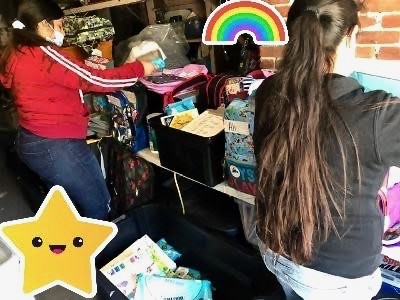
During the pandemic, Mission Education Projects Inc. is helping students and families with supplies as well. Lana reports how during one of their Zoom sessions she asked students what they needed and was “surprised by the simple request they had – they needed paper, pencils, crayons, markers – things they could use to make drawings or write stories on as well as make origami and paper airplanes.” With the help of some friends, Lana was able to gather the requested supplies and drop them off to the families. A picture of staff packing up the supplies is pictured below. “We were also able to get food boxes dropped off to the families which included fruits, vegetables, eggs, chicken, and pasta.”
MEPI staff members pack supplies for kids and their families.
Lana speaks on how despite the difficulties COVID-19 has brought, the rewards of having a smaller program are shining through. All of MEPI’s Junior staff are former students themselves. “These students have grown up together and are very familiar with each other and with the staff” (Lana Alviar). Lana mentions how one of the best parts of the day is the end of day Zoom sessions with staff and students in which they’re able to check-in, talk about what they’re working on, and just hang out. “We have always been close with our students and their parents, but the COVID-19 pandemic has strengthened those relationships and brought us even closer and made us stronger as a group.”
From Mission Education Projects Inc:
If you’d like to support to Mission Education Projects Inc. the nonprofit could always use monetary donations. The nonprofits’ monetary donations have dwindled and MEPI is especially in need due to unexpected costs related to COVID-19.
“The mission of Mission Education Projects, Inc. is to provide at-risk youth & their families an equal opportunity to access a quality cultural sensitive & holistic educational and quality of the life experience involving every aspect of the child’s world of safe and empowering environment.”
Oakland, CA. It started out as a personal mission to inspire spirituality throughout her neighborhood for Jasmine Taylor (pictured above on the right). She launched the “Stepping Out on Faith” prayer walk in October of 2014 and that led to her founding a nonprofit called 1C13 Productions.
The strategy of continuing 1C13 Productions, especially with the youth, during the COVID-19 pandemic is an ongoing discussion within the organization according to Taylor. Because the nonprofit works extensively with youth through direct interaction within school settings, COVID 19 has halted its programs. However, 1C13 remains dedicated to creating and offering programs that allow interaction with the students while adhering to social distancing mandates.
Services within the organization include youth outreach, community events, feeding the poor, and providing resources for Oakland families to fight poverty and enrich their children’s future through The Legacy Program.
One goal of 1C13 Productions is to eradicate hunger in urban communities. Given the effects of poverty and gentrification, many men, women, and children in urban communities face hunger daily. The nonprofit regularly feeds the homeless and is planning on expanding these efforts.
While initially focused on community programs,1C13 provides several programs for the youth of Oakland to acquire the skills which will bolster their confidence and create positive opportunities. The Walking in Royalty program exposes youth to many different disciplines of study and career opportunities to encourage the young people of Oakland to recognize their full potential and ensures a well-rounded exposure to different career possibilities.
Occasionally working directly with schools to provide life skills classes for both the youth and families through the Walking in Royalty programs, 1C13 also offers these programs to the public through the King/Queen Connections program. Taylor, who also holds the position of Restorative Bridge Maker at Frick United School of language to diffuse conflicts between students, describes her work with the youth as “the most gratifying” and a “beautiful and humbling opportunity”. The testimonies given from some 1C13 youth confirms their reciprocal admiration for the program and their mission; “(The Life Skills) class has changed me in many ways. It’s encouraged me to never give up. It taught me to be a young lady. It taught me to never let what other people say affect my future and who I want to be.” – Mia C., 8th grade.
From 1C13 Productions:
1C13 Productions Inc. is a pillar in the community and has created a lasting impact on youth, communities, and families throughout its 5-year tenure in the Bay Area and in its schools. Here are testimonials from some of those we’ve had the opportunity to work with.
“Jasmine Taylor has the best job in the world: empowering young kings and queens of East Oakland to live their truth and nurture their brilliance. As a teacher and trauma-informed student mentor at Frick Impact Academy, “Ms. Taylor” heals interpersonal harm through her expertise in Restorative Practices and leads students in deconstructing the forces of oppression in their lives and communities as they foster resilience, confidence, and integrity.”
San Francisco, CA. Sheltering at home is the most effective way to stop the spread of COVID-19, but for 1,100 homeless youth in San Francisco, it is impossible. On April 29, Larkin Street opened a new Shelter In Place Hotel in collaboration with the City of San Francisco. Site #1, as it is known, can house up to 55 people and is available to homeless youth aged 18 to 30. This is one of many solutions Larkin Street is using to provide shelter for SF youth, and in doing so, fight the spread of COVID-19.
Larkin Street Youth Services is a non-profit that provides housing, health services, and educational and employment support to homeless youth. The organization has found ways to provide essential services despite temporary facility closures. Larkin’s two drop-in sites, where homeless people can access free meals, hygiene supplies, bathrooms, and other services, are continuing to operate under social distancing guidelines. However, the nonprofit’s traditional housing services have been scaled back in light of San Francisco’s social distancing guidelines. The Lark-Inn Shelter for 18 to 24-year-olds is temporarily closed and the “Diamond Shelters”, homes for homeless minors, are operating at a reduced capacity.
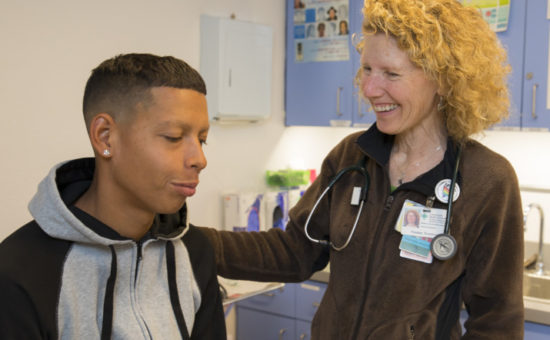
A health worker and patient smiling at a Larkin Street clinic.
Larkin Street has been able to put more people into its Rapid Rehousing rental subsidy program as the number of available apartments grows and the price of rentals in the City falls. Rapid Rehousing is part of Rising Up, a massive effort started by San Francisco Mayor London Breed in October 2018 to reduce homelessness for youth age 18 to 24 by 50% by 2023. The ambitious Rising Up initiative combines city and non-profit resources to provide housing, education, employment, and health services to San Francisco’s homeless youth. The program’s goal is to get 950 youth off of the streets by December 2022.
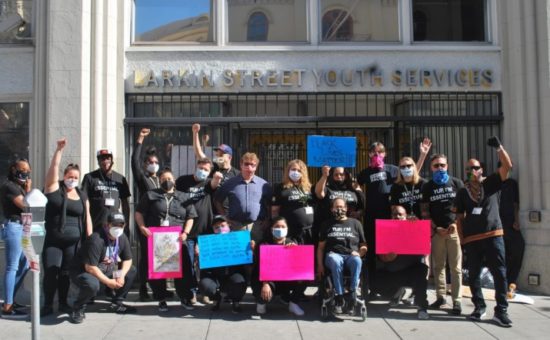
Black Lives Matter protesters posing in front of Larkin Street building. (Photo from Larkin Street Youth Services Facebook)
Furthermore, a “Safe Sleeping Village” is now available for homeless people living out of tents in San Francisco’s Haight-Ashbury neighborhood. The “village” has room for 37 tents, each spot marked on the pavement a safe distance from neighboring tents. Residents have access to sanitation facilities, food, water, and health services. This initiative is in part a response to the high number of unsanctioned encampments that have been popping up in public areas since the statewide shelter-in-place order.
Larkin Street has adapted its educational and career-building services as well. Although Larkin Street Academy counselors can no longer meet in classroom settings, they are still meeting individually with youth. In light of the economic downturn, Larkin Street is increasing their support of people looking for employment and accessing government stimulus checks.
From Larkin Street Youth Services:
Since 1984, Larkin Street Youth Services has given more than 75,000 young people a safe place to rebuild their lives. We provide housing, education and employment training, and health and wellness supports to help these young people get off the street for good.
NONPROFIT BENEFIT TICKET GIVEAWAYS!
Sign up for our free weekly highlights for the chance to win two tickets terrific nonprofit events! If you “like” us on facebook, or sign up for our weekly news highlights, you’ll be entered to win! Sign up today!
Look for another ticket giveaway soon! Are you a nonprofit looking to bolster your publicity with facebook and tweets? Email us and we’ll run a contest with tickets to your event! [email protected]
Categories
Archives
Affiliates
Deprecated: Using null as an array offset is deprecated, use an empty string instead in /home2/societz9/public_html/sfsocietypage/wp-content/themes/Divi/includes/builder/class-et-builder-global-feature-base.php on line 188