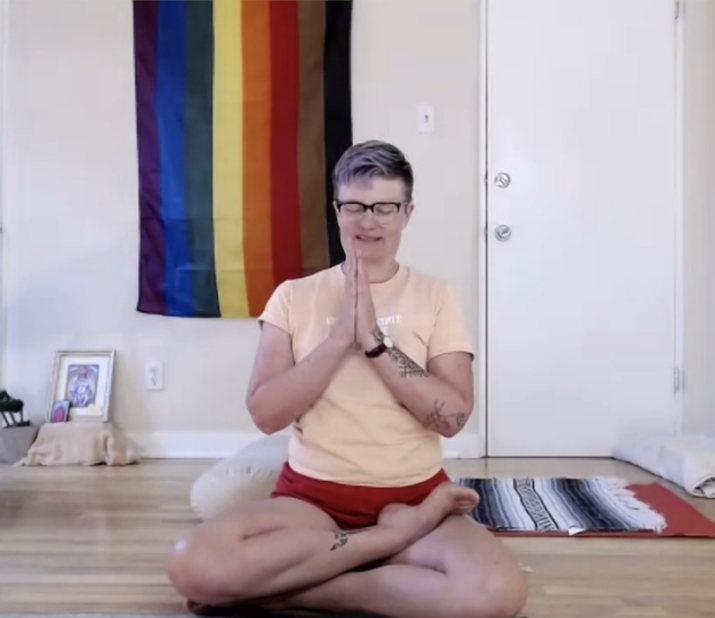
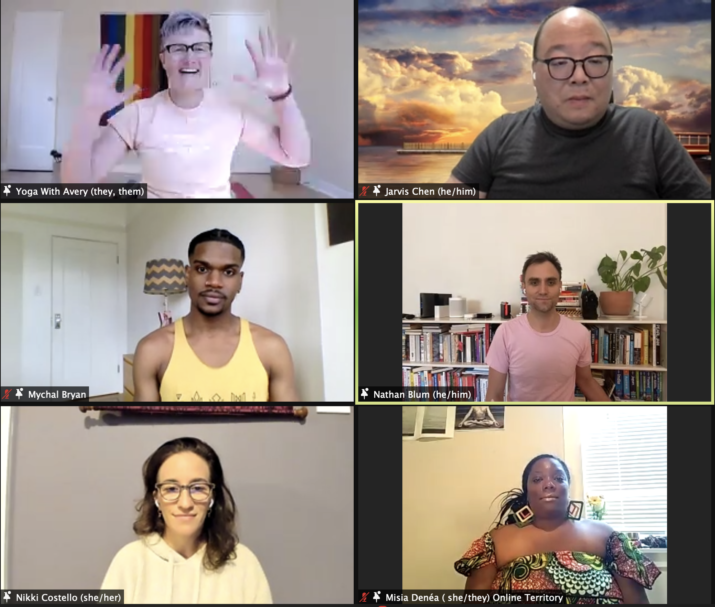
San Francisco, CA. The Iyengar Yoga Institute of San Francisco (IYISF) held its pride panel discussion “Uplifting LGBTQ+ Pride in Yoga” on Friday, June 26 via Zoom. The 60-minute panel featured queer and trans-identifying instructors from the Iyengar community discussing the intersection between their queer/trans identity and their Iyengar yoga practice. A 90-minute donation-based identity affirming practice preceded the event co-taught by panelists Avery Kalapa (they/them) featured above, and Nathan Blum (he/him). The yoga practice followed a theme of heart-openers, acceptance, and self-love with inclusive cueing.
Panelists meet via Zoom to discuss the intersection between their identity and their yoga practice.
The IYISF is an asset of the Iyengar Yoga Association of Northern California (IYANC) officially established in 1976, although under a different name at the time, and located in Lower Pacific Heights. The lineage of Iyengar Yoga finds its origin on the Indian Subcontinent. Mr. B.K.S. Iyengar developed this method when he began teaching in 1936. It rose to prominence in the West after his first book Light on Yoga was published in 1966 and became an international bestseller. The Iyengar style of practice centers primarily on the importance of timing and alignment in āsana, the physical postures. It is well known for its strategic utilization of numerous props including blankets, blocks, straps, bolsters, chairs, sandbags, and more. The understanding is that balance and alignment achieved in the body are reflected in the state of one’s mind.
The sentiment that one’s yoga practice and identity are deeply intertwined presented as a common theme amongst panelists. Most panelists shared the experience of trying to keep their identities as queer separate from their identity as yoga teachers. They learned over time the challenge of keeping these identities separate revealed there is a link between the experience of yoga and the queer experience. Panelist Misia Denéa says her identity as a queer black gender non-conforming femme is an essential part of her yoga practice: “[Our] journey to enlightenment only comes through exploration and understanding of suffering. I bring my queerness with me to my mat and my [meditation] cushion because accepting it offers me the bandwidth to be with my suffering.”
Panelist Misia Denéa, owner of Hatha Hoslistic Integrative Wellness.
From the IYISF:
“The first Pride was a riot – and using the practice of Yoga to shed social conditioning and attachments rooted in avidya can also be a revolutionary act. This yoga includes āsana and philosophy to uplift your wholeness and create inner space to cherish the parts of you that don’t fit into cis-hetero norms. Queer perspectives shine a light on the path for us all on the journey towards inner freedom and collective healing.”
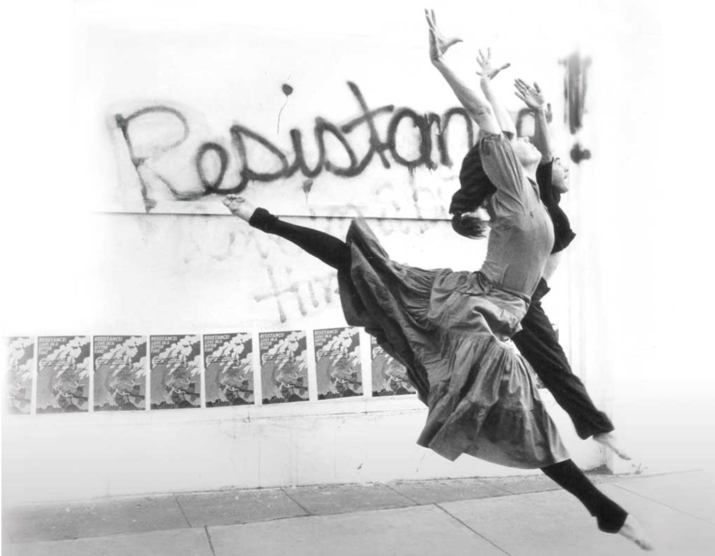
San Francisco, CA. The urgency of the moment in the wake of George Floyd was never lost on Dance Mission Theater. Founded on social change and resistance through dance performance, DMT took swift action in solidarity with the Black Lives Matter movement. Staff and board members established a Reparations Program to support dancers and artists of African descent. Krissy Keefer, Executive Director, released a statement outlining the theater’s response to the “gross inequities” laid bare by the COVID-19 pandemic. Their Reparations Program includes access to free theater space, free tuition for youth dance classes, reduced rates on rehearsal space, and half-off adult classes.
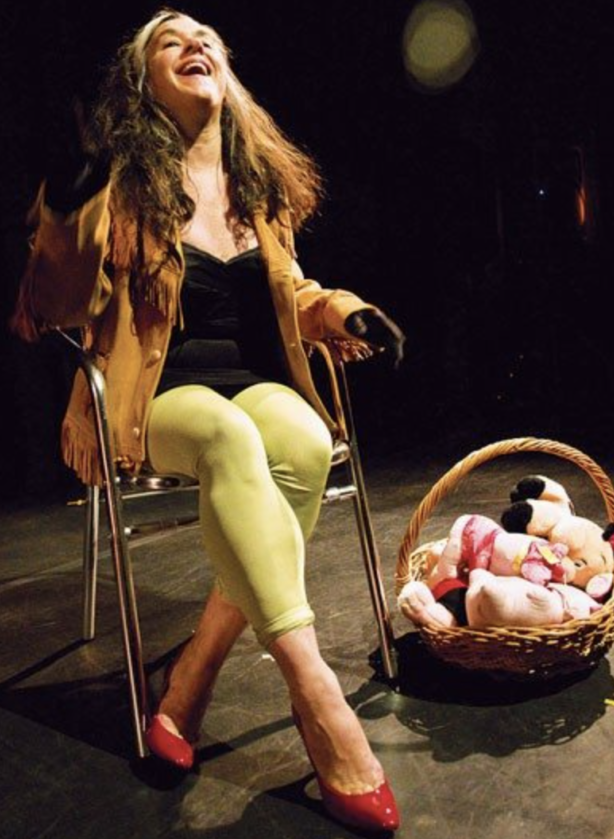
Krissy Keefer, co-founder of Dance Brigade and Executive Director of DMT. Photo from the San Francisco Examiner.
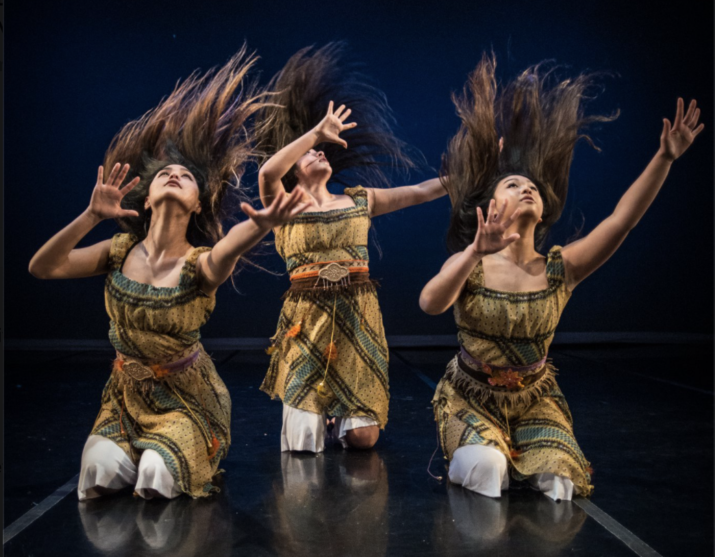
Dance Mission Theater originated in 1984 as a single feminist dance company, the Dance Brigade. The Dance Brigade spent 14 years establishing its artistic voice and community presence. In 1998 they created Dance Mission Theater, a 140-seat black box theater, and 3 dance studios located at 24th and Mission. To this day, Dance Mission Theater is a cultural hub for BIPOC, LGBTQIA+, and women artists. A flourishing inter-generational community, Dance Mission “connects and empowers [students of diverse backgrounds] through dance”. Classes and productions feature culturally rooted dance forms while exploring complex social justice issues. Dance Mission is dedicated to centering those marginalized by race, poverty, and gender in the arts. Providing accessible classes and spaces to Black students through their Reparations Program is a new step toward forwarding that goal.
Grrrl Bridgade performs to Robbie Robertson’s song “Coyote Dance” at the Brigade’s 15th Anniversary Performance.
From Dance Mission Theater:
Dance Mission Theater operates from the understanding that the United States was founded on the genocide of Native peoples and the enslavement of African people and has neither apologized nor rectified this original wound. We are committed to programming that reflects the best efforts of who we are – BIPOC, LBGTQ+, and Children – to transform the culture of white supremacy, police brutality, and patriarchy to build a more equitable and peaceful world.
Author’s note: Ericka Hart, M.Ed. and anti-racist educator, calls attention to the fact that while Dance Mission Theater decided to term this program “Reparations” it is not actually reparations. Reparations are owed to Black people by the State because of the generations of wealth denied to the enslaved Black persons who produced them. Individual and community action separate from the State does not diminish nor replace that responsibility.
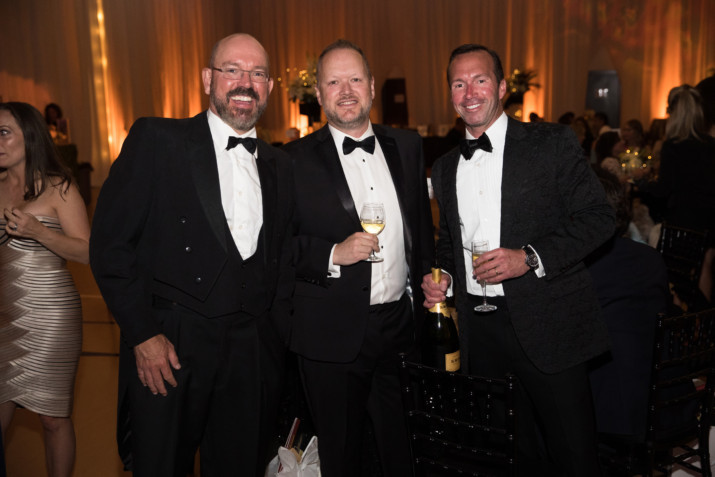
Incline Village, NV. On May 22nd, 2021 Lake Tahoe School in Incline Village, NV held an in-person gala! The Bubble Ball was the name of this year’s gala fundraiser, held for the first time in the school’s new Athletic and Performing Arts Center on campus. 130 guests enjoyed fine dining by Roundabout Catering in a space transformed by Creative Coverings and Celadon Events, plus a raucous auction that raised nearly $500,000. Kristen O’Donnell and Sarah Williams, (seen above) were the Gala Co-Chairs. (Photo credit Ciprian Cojac)
Matthew Hill, Kevin Kassekert and Keith O’Donnell
Venue transformed by Celadon Events, Creative Coverings and Crux Productions
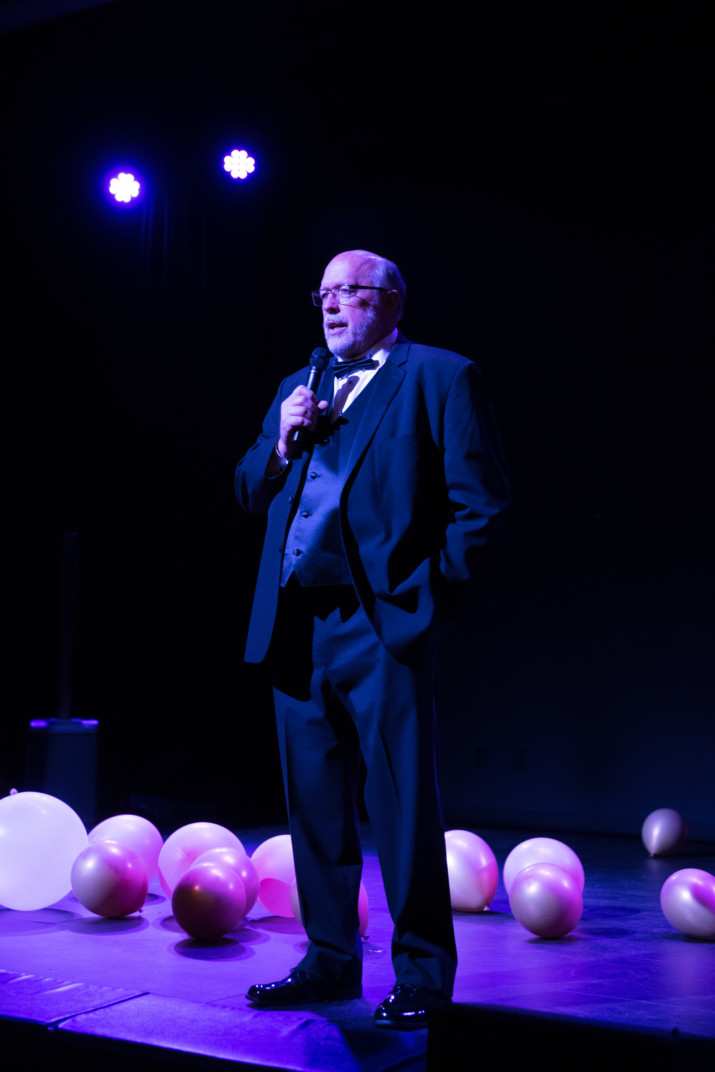
Head of School Robert E. Graves
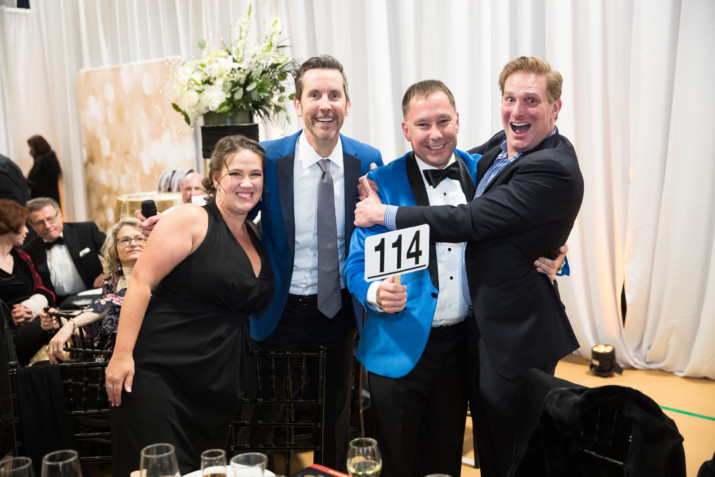
Auctioneer Keith McLane, BAS, (2nd from left) congratulates SpaceX Tour winners Melissa Green, Jason Green and Rob Alston
From Lake Tahoe School:
The Lake Tahoe School annual gala raises funds to benefit tuition assistance, faculty and staff development, facilities improvements, safety protocols, and special programming for our students. Lake Tahoe School is an independent, PreK-3 through 8th-grade school providing the highest standards of education in the Sierras.
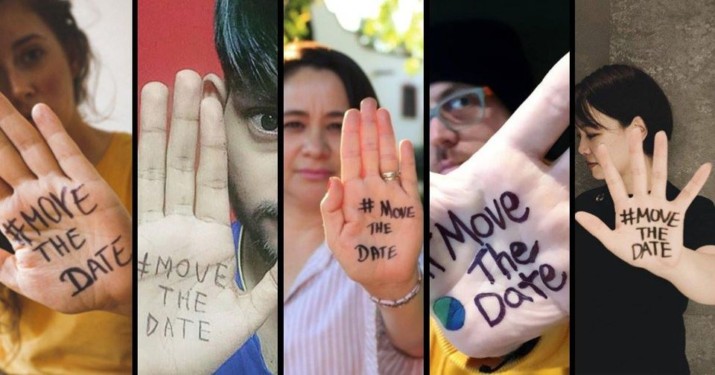
Oakland, CA. More than fourteen different international organizations have agreed with the Global Footprint Network on bringing more awareness about Earth Overshoot Day (EOD). EOD is essentially a day calculated by the Global Footprint Network where humans’ usage and consumption of Earth’s natural resources exceeds or overshoots the amount the planet is actually able to produce.
The EOD is calculated by dividing the number of natural resources the Earth generates each year or biocapacity, by the human consumption of Earth’s natural resources that year or the world’s ecological footprint.
Generally speaking, the earlier the date is in the year, the quicker it was for humans to consume more resources than the Earth can produce.
The EOD each year generally shrinks back to earlier in the year as human activity and consumption of natural resources gradually increases. However, the 2020 EOD took place 24 days later than the 2019 EOD.
Some solutions the Global Footprint Network has put forth for this year include nurturing nature’s biodiversity in your local area, transferring to renewable energies, and transforming our systems when it comes to producing food and running our cities.
“All the while we cannot afford to wait before we take action, one city, one country, one company, one entity, one individual at a time…ultimately, a constellation of life-sustaining actions is what is needed in order to #MoveTheDate of Earth Overshoot Day intentionally and by design,” said Global Footprint Network.
From Global Footprint Network:
Everyone should be able to look forward to a bright future where we all thrive within the means of our one planet. However, our economies are currently running a fraudulent Ponzi (or pyramid) scheme with our planet. We are consuming natural resources faster than they can regenerate; we are using the Earth’s future resources to operate in the present; we are digging ourselves deeper and deeper into ecological debt.
Prosperity can only last if we embrace the limits of our planet. Accepting limits allows us to build an economy that works forever. Ignoring limits leads to a finite, time-limited economy which steadily since it erodes the planet it depends on.
A path to success – or to one-planet prosperity – requires robust metrics that relate our global context to local decisions. Measure what you treasure: To build a world where all can thrive, we need to know how much nature we have and how much we use.
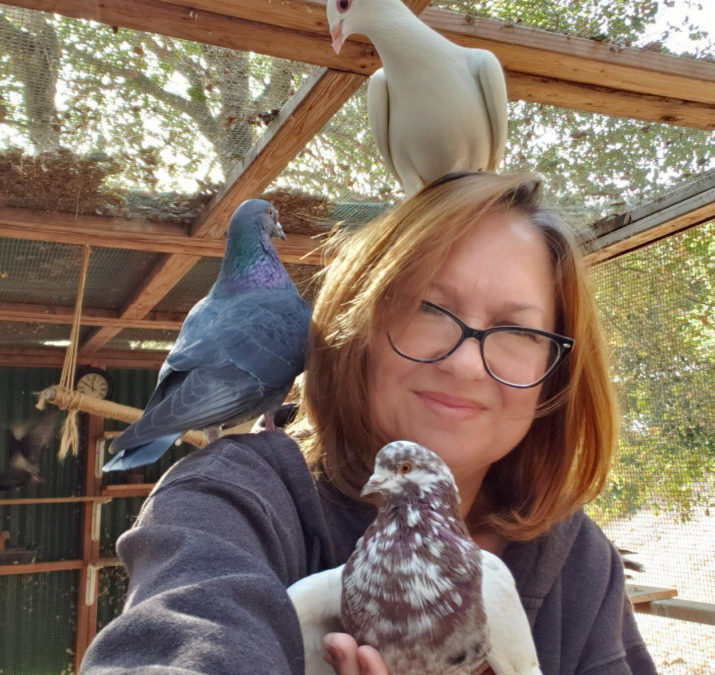
San Francisco, CA. Palomacy Bird Care Coordinator Jill Shepard (seen above) discusses the organization’s root beginnings and why pigeons and doves make great pets for those looking to adopt a new friend.
Elizabeth Young, the founder and director of Palomacy, volunteered at San Francisco Animal Care and Control in the mid-2000s and monitored the small animals that came in like bunnies, guinea pigs, and pigeons.
“She would see these big white pigeons come in and they were put in the back of the kennel so nobody saw them,” Shepard said, “and they were later euthanized because nobody really knew what to do with these pigeons.”
Most of the birds that would be admitted to Animal Control were the domestic King Pigeons. These birds are popular as meat products as it only takes 4-5 weeks to fatten the young pigeons before slaughter. They are called squab on menus.
The ones that are taken away from slaughterhouses generally do not understand how to fend after themselves due to their domesticated and young nature. They will often starve as a result unless taken into shelters.
“There are over 300 breeds of domesticated pigeons that can’t live in the wild,” Shepard said, “it’s like releasing a puppy in the forest, they don’t have that DNA.”
Young wanted to focus her volunteer efforts on rescuing pigeons and doves after her experience at the animal control and adopting her first king pigeons.
“There was this parrot rescue group in the bay area called ‘Mickaboo’ and so she asked for their help,” Shepard said, “and that’s how it got started.”
Young would dedicate her spare time between jobs caring for rescued pigeons and doves in her own department at Mickaboo called Mickacoo.
Shepard first got involved with Young’s work in 2011 when the director decided to split off from Mickaboo and found her own organization called Palomacy.
“Every day is different,” Shepard said in consideration of the regular routine of Palomacy, “it’s all over the place.”
Shepard’s days can be consumed with all sorts of activities including reading through adoption or foster applications, making sure the birds’ needs are met, and transporting sick pigeons to The Medical Center for Birds in Oakley, CA.
Shepard discussed how pigeons are considered monogamous animals, and after they are about 5-6 months old, they live with a mate for life. Pigeons are “particular” about their mates and Shepard will often spend her day doing “pigeon matchmaking” to find the right pairs to live with each other in and outside of the rescue.
2020 has been an interesting year for several nonprofit organizations and Palomacy has missed out on continuing its educational outreach programs that help bring more positive attention to the birds. Despite this slight setback, Palomacy has been able to stay open strictly following CDC social distancing guidelines.
“We’re actually adopting more out than we ever have, so our numbers are pretty high with adoptions,” Shepard said.
The bird care coordinator credits the increase of adoptions to people staying at home and finding out about Palomacy themselves.
The organization runs entirely from its donations and will continue to accept new rescues to find more loving, safe homes for life.
“They’re not disposable animals,” Shepard stated, “they are very emotionally driven, they’re smart, they’re one of the few species that can self-recognize in mirrors, they’re very emotional birds, they love love.”
From Palomacy:
Palomacy (a Community Initiatives project) is a volunteer-powered, donation-funded rescue for domestic (unreleasable) pigeons & doves in the San Francisco Bay Area. Palomacy provides avian vet treatment, foster care & adoption services locally & consultation & referrals all over the country. Started in 2007, Palomacy has directly saved the lives of more than 1,000 birds & assisted countless others.
San Francisco, CA. The Latino Community Foundation (LCF) is an organization whose goal is to unleash the power of Latinos in California. In response to COVID-19, the organization launched an initiative called Love Not Fear Fund which is focused on protecting Latinos from the economic burden of the pandemic. LCF raised around 1.5million dollars for the fund which was then distributed in three phases. In the first phase, the fund provided immediate relief to 47 Latino-led organizations. For the second phase, LCF gave out grants to organizations whose goals aligned with their own: building civic and economic power and investing in economic opportunities for Latinos. The third phase of the fund focuses on civic engagement and building lasting power to enable systemic change for Latinos.
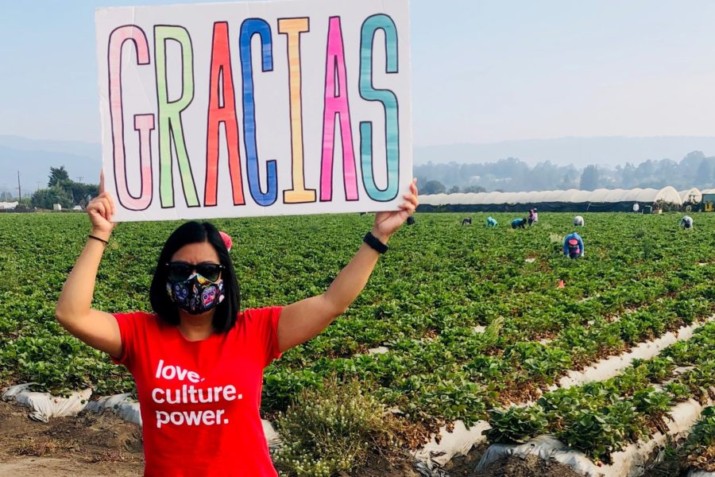
Central Valley, CA Giving Circle (Pre COVID-19) Picture taken from https://latinocf.org/
Chelsea Lopez the foundation’s Program and Administrative Assistant described the foundation as “a group of individuals who want more for the Latino community because they deserve more”. In addition to the Love Not Fear Fund, LCF has also founded Giving Circle Networks across California. Latino Giving Circles are groups of individuals who come together and chose which Latino-led organizations they want to donate to. Through these Giving Circles, LCF has developed the largest network of Latino philanthropists in the country. “At the Latino Community Fund we are really trying to expand the definition of the word “philanthropist” so that anyone can be a philanthropist”, Lopez explained.
The Latino Community Foundation also focuses on politically mobilizing Latinos. This year they started a movement called “To Resist We Must Exist #Census2020” to encourage Latinos to fill out the census. As a result, 2020 saw record numbers of Latinos in its Census reports, which is an incredible accomplishment for the Latino community.
NONPROFIT BENEFIT TICKET GIVEAWAYS!
Sign up for our free weekly highlights for the chance to win two tickets terrific nonprofit events! If you “like” us on facebook, or sign up for our weekly news highlights, you’ll be entered to win! Sign up today!
Look for another ticket giveaway soon! Are you a nonprofit looking to bolster your publicity with facebook and tweets? Email us and we’ll run a contest with tickets to your event! [email protected]
Categories
Archives
Affiliates
Deprecated: Using null as an array offset is deprecated, use an empty string instead in /home2/societz9/public_html/sfsocietypage/wp-content/themes/Divi/includes/builder/class-et-builder-global-feature-base.php on line 188